Welcome to MITR Hospital
Robotic Surgery for Prostate Cancer: Benefits & Recovery
A diagnosis of prostate cancer can be overwhelming, but advances in medical technology have made treatment more precise and less invasive than ever before. One of the most significant developments in prostate cancer care is robotic-assisted surgery, which offers excellent cancer control while helping patients recover faster with fewer complications.
For men diagnosed with localized prostate cancer, robotic surgery has become a preferred treatment option due to its precision, improved visualization, and minimally invasive approach. Understanding how the procedure works, its benefits, and what to expect during recovery can help patients make informed treatment decisions.
What Is Prostate Cancer?
The prostate is a small gland located below the bladder that plays an important role in the male reproductive system.
Prostate cancer develops when abnormal cells in the prostate grow uncontrollably and form a tumor. In its early stages, the disease may not cause noticeable symptoms, which is why regular screening and timely evaluation are important, especially for men over the age of 50 or those with a family history of prostate cancer.
When detected early, prostate cancer is often highly treatable.
What Is Robotic Surgery for Prostate Cancer?
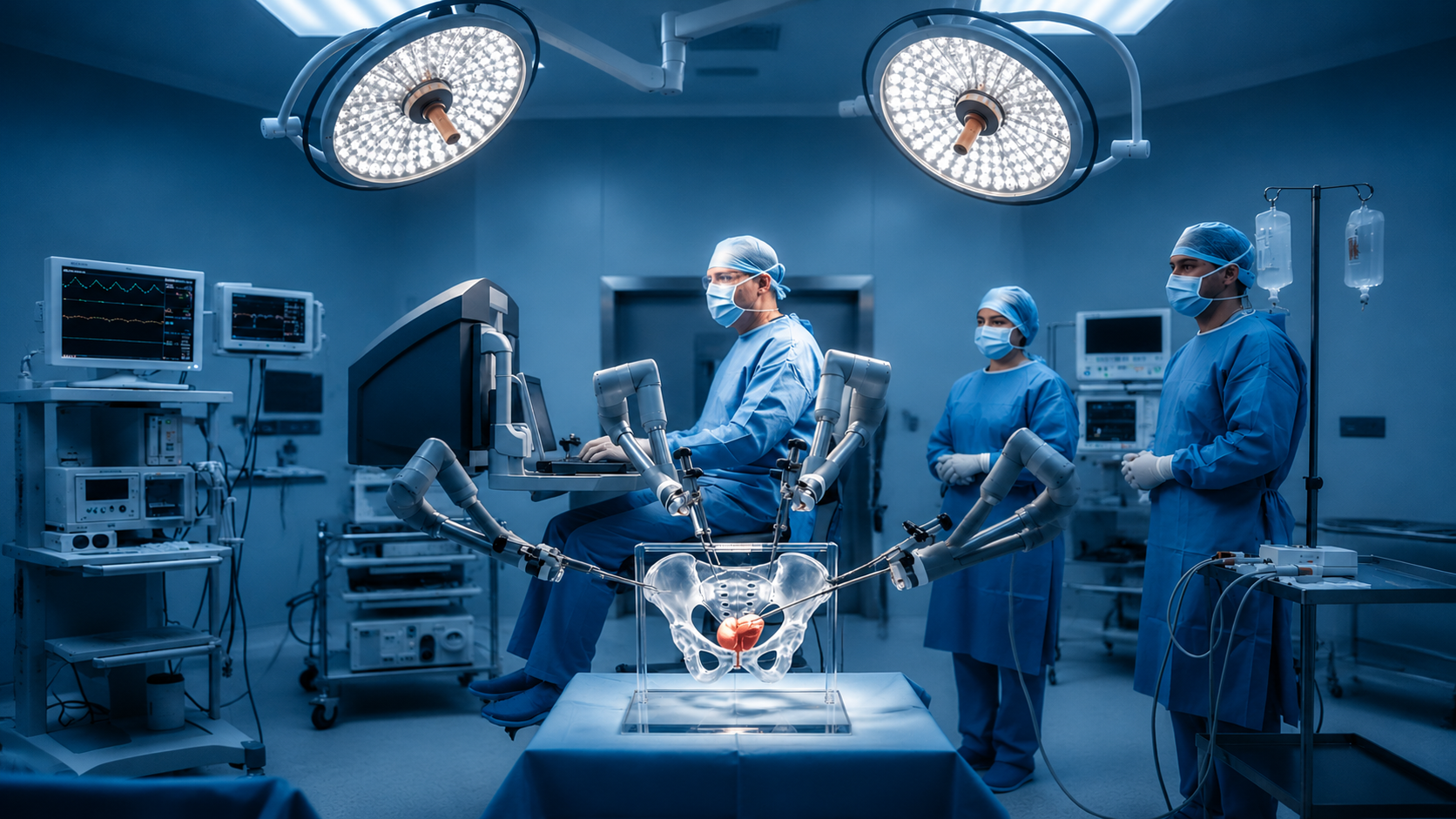
Robotic surgery, also known as robotic-assisted radical prostatectomy, is a minimally invasive procedure used to remove the prostate gland affected by cancer.
During the surgery, the surgeon controls advanced robotic instruments from a specialized console. The robotic system translates the surgeon's hand movements into highly precise movements of tiny surgical instruments.
Despite the name, the robot does not perform the surgery independently. Every movement is controlled by the surgeon, allowing for exceptional accuracy while preserving surrounding healthy tissues whenever possible.
Who Is a Candidate for Robotic Prostate Surgery?
Robotic surgery may be recommended for patients who have:
- Localized prostate cancer
- Early-stage prostate cancer
- Good overall health for surgery
- No evidence of widespread cancer
The decision depends on several factors, including:
- Cancer stage
- PSA levels
- Gleason score
- Age
- Overall health
- Patient preferences
A detailed evaluation by a urologist helps determine the most suitable treatment approach.
How Is Robotic Surgery Performed?
The procedure involves several carefully planned steps.
1. Anesthesia
The surgery is performed under general anesthesia to ensure patient comfort.
2. Small Keyhole Incisions
Instead of a large abdominal incision, several small openings are made to insert robotic instruments and a high-definition camera.
3. High-Definition 3D Visualization
The robotic system provides the surgeon with a magnified three-dimensional view of the surgical field, allowing precise identification of important structures.
4. Removal of the Prostate
The prostate gland and, when necessary, nearby tissues are carefully removed while preserving critical nerves and muscles whenever possible.
5. Reconstruction
The bladder is reconnected to the urethra, and a urinary catheter is placed temporarily to allow proper healing.
Benefits of Robotic Surgery for Prostate Cancer
Robotic-assisted surgery offers several advantages compared to traditional open surgery.
Greater Surgical Precision
Robotic instruments allow highly accurate movements, helping surgeons operate in delicate areas with improved control.
Smaller Incisions
The procedure uses small keyhole incisions instead of a large surgical cut, resulting in less tissue damage.
Less Blood Loss
The precision of robotic surgery generally results in reduced bleeding during the operation.
Reduced Pain
Patients usually experience less postoperative discomfort compared to open surgery.
Shorter Hospital Stay
Many patients are discharged within one to three days after surgery, depending on their recovery.
Faster Recovery
Smaller incisions and less tissue trauma allow patients to return to normal daily activities sooner.
Better Cosmetic Results
Minimal scarring is another advantage of minimally invasive robotic procedures.
Improved Visualization
The surgeon benefits from a magnified 3D view, which helps improve surgical accuracy and preserve important surrounding structures.
What to Expect After Robotic Surgery
Recovery varies from person to person, but most patients follow a predictable healing process.
Immediately After Surgery
Patients are monitored in the recovery area before being shifted to their hospital room.
A urinary catheter is usually placed to support healing.
Hospital Stay
Most patients remain hospitalized for one to three days, depending on:
- Overall health
- Surgical complexity
- Recovery progress
First Week After Surgery
During the first week, patients may experience:
- Mild abdominal discomfort
- Fatigue
- Temporary urinary catheter
- Slight blood in urine
Walking and light activity are encouraged to promote recovery.
Two to Four Weeks
Most patients gradually resume:
- Daily household activities
- Light office work
- Normal walking routine
Heavy lifting and strenuous exercise should still be avoided during this period.
Four to Six Weeks
Many patients can return to most routine activities after receiving clearance from their surgeon.
Full recovery may continue over several weeks or months depending on individual health and healing.
Possible Side Effects After Surgery
Like any major procedure, robotic prostate surgery may have temporary side effects.
Urinary Incontinence
Some men experience temporary leakage of urine after surgery.
Pelvic floor exercises often help improve bladder control during recovery.
Erectile Dysfunction
Because nerves responsible for erections are located close to the prostate, temporary erectile dysfunction may occur.
When appropriate, nerve-sparing surgical techniques are used to improve the chances of preserving erectile function.
Recovery varies based on:
- Age
- Overall health
- Cancer stage
- Preoperative sexual function
Temporary Fatigue
It is normal to feel tired during the early recovery period as the body heals.
Tips for Faster Recovery
Patients can support healing by:
- Walking regularly
- Drinking adequate water
- Following prescribed medications
- Eating a balanced diet
- Avoiding smoking
- Avoiding heavy lifting
- Attending scheduled follow-up appointments
Following postoperative instructions carefully can reduce complications and improve recovery.
How Effective Is Robotic Surgery?
For appropriately selected patients with localized prostate cancer, robotic-assisted surgery offers excellent cancer control while preserving urinary and sexual function whenever possible.
Outcomes depend on several factors, including:
- Cancer stage
- Tumor characteristics
- Surgeon's experience
- Overall patient health
Long-term follow-up is important to monitor recovery and ensure successful treatment.
Other Treatment Options for Prostate Cancer
Depending on the stage and characteristics of the disease, treatment may also include:
- Active surveillance
- Radiation therapy
- Hormone therapy
- Chemotherapy
- Combination treatment
Your urologist will recommend the most appropriate option based on your individual condition.
Why Choose Robotic Urology Surgery?
Robotic-assisted procedures have transformed modern urology by providing safer and more precise surgical care.
Patients undergoing robotic urology surgery in Navi Mumbai can benefit from advanced technology that offers:
- Minimally invasive treatment
- Enhanced surgical precision
- Reduced postoperative discomfort
- Faster return to normal activities
- Smaller scars
- Shorter hospital stay
These advantages have made robotic surgery an important option for many urological cancers and complex procedures.
Why Timely Prostate Cancer Treatment Matters
Early diagnosis provides the greatest opportunity for successful treatment.
Delaying care may allow cancer to progress, making treatment more complex. Seeking prompt evaluation for symptoms such as difficulty urinating, blood in urine, elevated PSA levels, or abnormal screening results can improve outcomes.
Modern prostate cancer treatment includes a range of advanced options, allowing treatment plans to be tailored to each patient's condition, cancer stage, and overall health.
How MITR Urology Associates Can Help
MITR Urology Associates offers comprehensive evaluation and advanced management for prostate cancer.
The focus includes:
- Early diagnosis
- Personalized treatment planning
- Minimally invasive surgical techniques
- Robotic-assisted urological procedures
- Long-term follow-up care
- Patient-centered support throughout treatment and recovery
Every treatment plan is designed according to the patient's cancer stage, overall health, and individual goals.
Conclusion
Robotic surgery has revolutionized the treatment of localized prostate cancer by combining surgical precision with the benefits of minimally invasive technology. Smaller incisions, reduced pain, quicker recovery, and excellent cancer control have made it a preferred treatment option for many patients.
If you or a loved one has been diagnosed with prostate cancer, consulting an experienced urologist can help determine whether robotic surgery is the right choice. Early diagnosis and appropriate treatment remain the most important factors in achieving the best possible outcomes.
Copyright © All Rights Reserved, By MITR Urology Associates