Welcome to MITR Hospital
Prostate Cancer Treatment
Prostate cancer is one of the most common cancers affecting men worldwide. It develops in the prostate gland, a small gland located below the bladder that plays an important role in male reproductive health. While some prostate cancers grow slowly, others can be more aggressive and require prompt treatment.
At MITR Urology Associates, we provide comprehensive prostate cancer treatment in Navi Mumbai, offering advanced diagnostic evaluation, prostate cancer screening, minimally invasive surgery, robotic-assisted procedures, and personalized cancer care. Our experienced uro-oncology specialists focus on delivering evidence-based treatment plans tailored to each patient's condition and treatment goals.
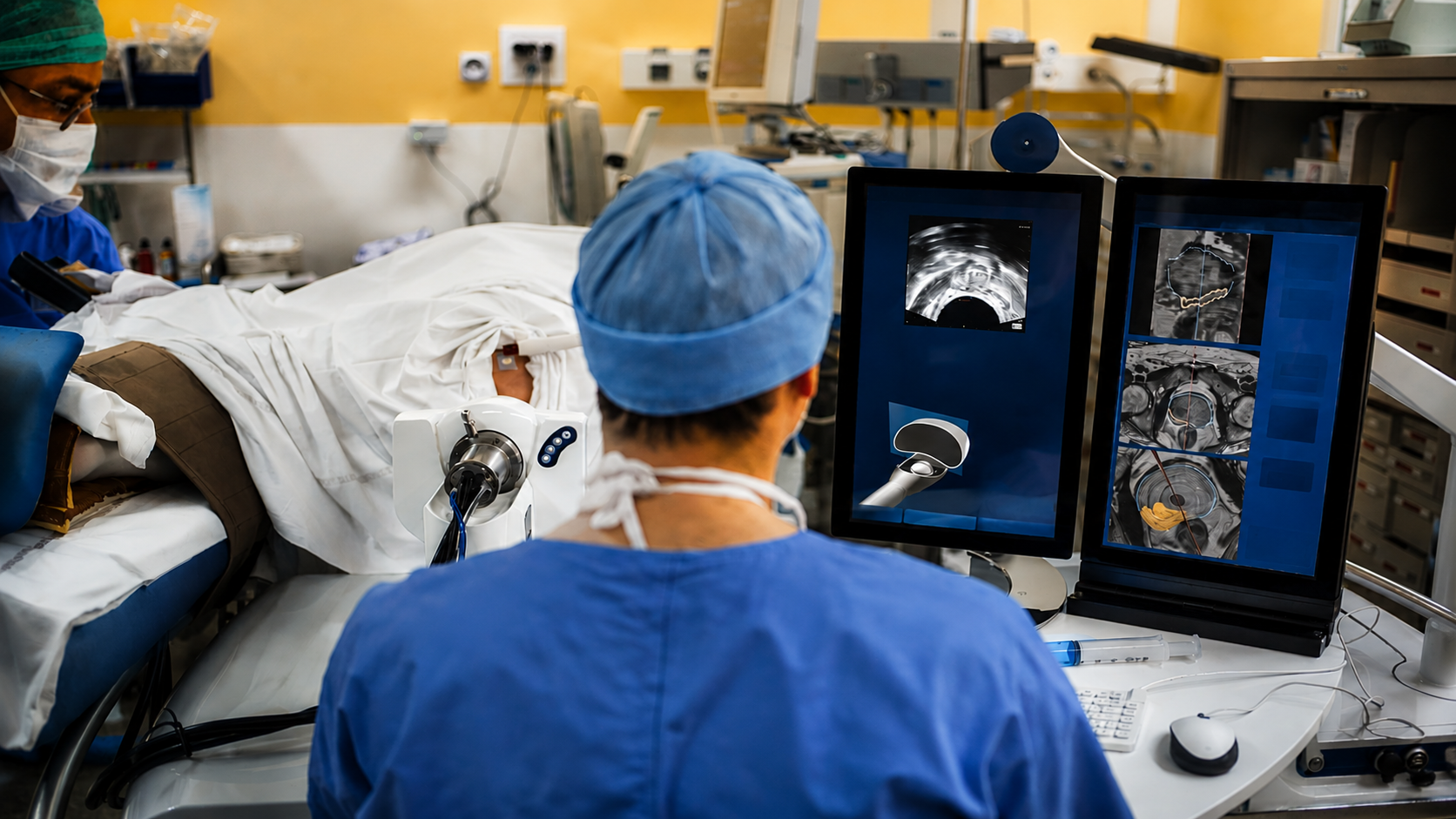
What is Prostate Cancer?
Prostate cancer occurs when abnormal cells in the prostate gland grow uncontrollably and form a tumor. In many cases, prostate cancer develops slowly and may not cause symptoms during its early stages. However, some forms can grow rapidly and spread to nearby tissues or distant organs if left untreated.
Early detection significantly improves treatment outcomes and provides access to a wider range of treatment options.
Understanding the Prostate Gland
The prostate is a walnut-sized gland located below the bladder and in front of the rectum.
Its primary functions include:
- Producing fluid that nourishes and transports sperm
- Supporting male reproductive function
- Contributing to semen production
As men age, the prostate may develop various conditions, including enlargement and cancer.
Signs and Symptoms of Prostate Cancer
Early-stage prostate cancer may not cause noticeable symptoms. As the disease progresses, symptoms may include:
- Difficulty Urinating: Trouble starting or maintaining urine flow.
- Weak Urine Stream: Reduced force during urination.
- Frequent Urination: Particularly during the night.
- Blood in Urine: Visible blood may occasionally occur.
- Blood in Semen: Some patients may notice discoloration of semen.
- Erectile Dysfunction: Difficulty achieving or maintaining erections.
- Pelvic Discomfort: Pain or discomfort in the pelvic region.
- Bone Pain: Advanced prostate cancer may spread to bones and cause pain.
What Causes Prostate Cancer?
The exact cause of prostate cancer remains unclear, but several risk factors are associated with its development.
Age
Risk increases significantly after the age of 50.
Family History
A family history of prostate cancer may increase risk.
Genetic Factors
Certain inherited gene mutations may contribute to prostate cancer development.
Hormonal Factors
Male hormones can influence prostate cell growth.
Obesity
Excess body weight may increase the risk of aggressive prostate cancer.
Lifestyle Factors
Dietary habits and physical inactivity may contribute to risk.
Who is at Risk of Prostate Cancer?
You may be at increased risk if you:
- Are over 50 years of age
- Have a family history of prostate cancer
- Have a family history of certain hereditary cancers
- Are overweight or obese
- Have elevated PSA levels
- Have previously diagnosed prostate abnormalities
How is Prostate Cancer Diagnosed?
Accurate diagnosis is essential for determining the stage and treatment plan.
Medical History and Physical Examination
Your doctor will assess symptoms and evaluate risk factors.
PSA Blood Test
The Prostate-Specific Antigen (PSA) test is commonly used to evaluate prostate health. Elevated PSA levels may require further investigation.
Digital Rectal Examination (DRE)
A physical examination used to assess the prostate gland.
Multiparametric MRI
Advanced imaging helps identify suspicious areas within the prostate.
Prostate Biopsy
A biopsy is performed to confirm the diagnosis and determine cancer characteristics.
CT Scan and Bone Scan
Additional imaging may be required to determine whether cancer has spread.
Stages of Prostate Cancer
- Stage I: Cancer remains confined to the prostate and is usually detected early.
- Stage II: Cancer is still limited to the prostate but may be larger.
- Stage III: Cancer extends beyond the prostate into nearby tissues.
- Stage IV: Cancer has spread to lymph nodes, bones, or other organs.
Accurate staging helps guide treatment decisions.
Prostate Cancer Treatment Options
Treatment depends on the stage of cancer, overall health, age, and patient preferences.
Active Surveillance
Selected patients with low-risk prostate cancer may be monitored closely without immediate treatment.
Radical Prostatectomy
Surgical removal of the prostate gland may be recommended for localized prostate cancer. Benefits include: Effective cancer control, Potential curative treatment, Long-term disease management
Robotic Prostate Cancer Surgery
Robotic-assisted surgery offers: Greater surgical precision, Smaller incisions, Reduced blood loss, Faster recovery
Laparoscopic Prostate Surgery
A minimally invasive alternative to traditional open surgery.
Radiation Therapy
Radiation may be used alone or in combination with other treatments.
Hormone Therapy
Hormonal treatment helps reduce the growth-promoting effects of male hormones on cancer cells.
Advanced Cancer Treatment
Patients with advanced disease may require additional therapies based on individual circumstances.
Importance of Early Detection
Early detection offers several advantages:
- Greater treatment options
- Higher cure rates
- Better preservation of urinary and sexual function
- Improved long-term outcomes
Men over 50 and those with risk factors should discuss prostate screening with a specialist.
Can Prostate Cancer Be Cured?
Many patients diagnosed with localized prostate cancer achieve excellent outcomes with appropriate treatment.
The likelihood of cure depends on:
- Stage of cancer
- Tumor characteristics
- Overall health
- Timely diagnosis
Regular follow-up remains an essential part of long-term care.
Why Choose MITR Urology Associates for Prostate Cancer Treatment?
Experienced Uro-Oncology Specialists
Our team specializes in diagnosing and treating prostate and other urological cancers.
Advanced Diagnostic Facilities
Modern imaging and laboratory services support accurate diagnosis and staging.
Robotic and Minimally Invasive Surgery
We offer advanced surgical techniques aimed at effective cancer treatment and faster recovery.
Personalized Treatment Plans
Every patient receives a customized treatment strategy based on individual needs.
Comprehensive Cancer Care
From diagnosis to follow-up, we provide complete uro-oncology support.
Convenient Access
Serving patients from:
- Navi Mumbai
- Kharghar
- Ulwe
- Panvel
- Mumbai
- Nearby regions
Frequently Asked Questions
Many patients have no symptoms initially. Elevated PSA levels may be the first indication.
Yes. Many cases diagnosed at an early stage can be treated successfully.
Yes. It is one of the most common cancers affecting men.
A PSA test measures prostate-specific antigen levels in the blood and helps evaluate prostate health.
Yes. Robotic-assisted prostate surgery may be an option for suitable patients.
A uro-oncologist or urologist specializing in prostate cancer manages diagnosis and treatment.
Book a Consultation for Prostate Cancer Treatment
If you have elevated PSA levels, urinary symptoms, a family history of prostate cancer, or have been diagnosed with prostate cancer, consult the specialists at MITR Urology Associates for a comprehensive evaluation.
Our experienced uro-oncology team provides advanced prostate cancer screening, diagnostic services, robotic surgical expertise, and personalized treatment plans designed to achieve the best possible outcomes while maintaining quality of life.
Copyright © All Rights Reserved, By MITR Urology Associates