Welcome to MITR Hospital
RIRS vs PCNL: Which Kidney Stone Surgery Is Better?
Kidney stones can cause severe pain, urinary blockage, infection, and long-term kidney problems if left untreated. Fortunately, modern urology offers advanced minimally invasive procedures that can remove stones safely and effectively. Among the most commonly performed procedures are RIRS (Retrograde Intrarenal Surgery) and PCNL (Percutaneous Nephrolithotomy).
Many patients often ask: Which kidney stone surgery is better — RIRS or PCNL?
The answer depends on several factors, including the size, location, hardness, and number of stones. Both procedures are highly effective, but each has specific advantages and ideal situations where it works best.
At MITR Urology Associates, advanced kidney stone laser surgery and minimally invasive stone removal procedures are performed using modern endourological technology to provide safe treatment and faster recovery for patients in Navi Mumbai.
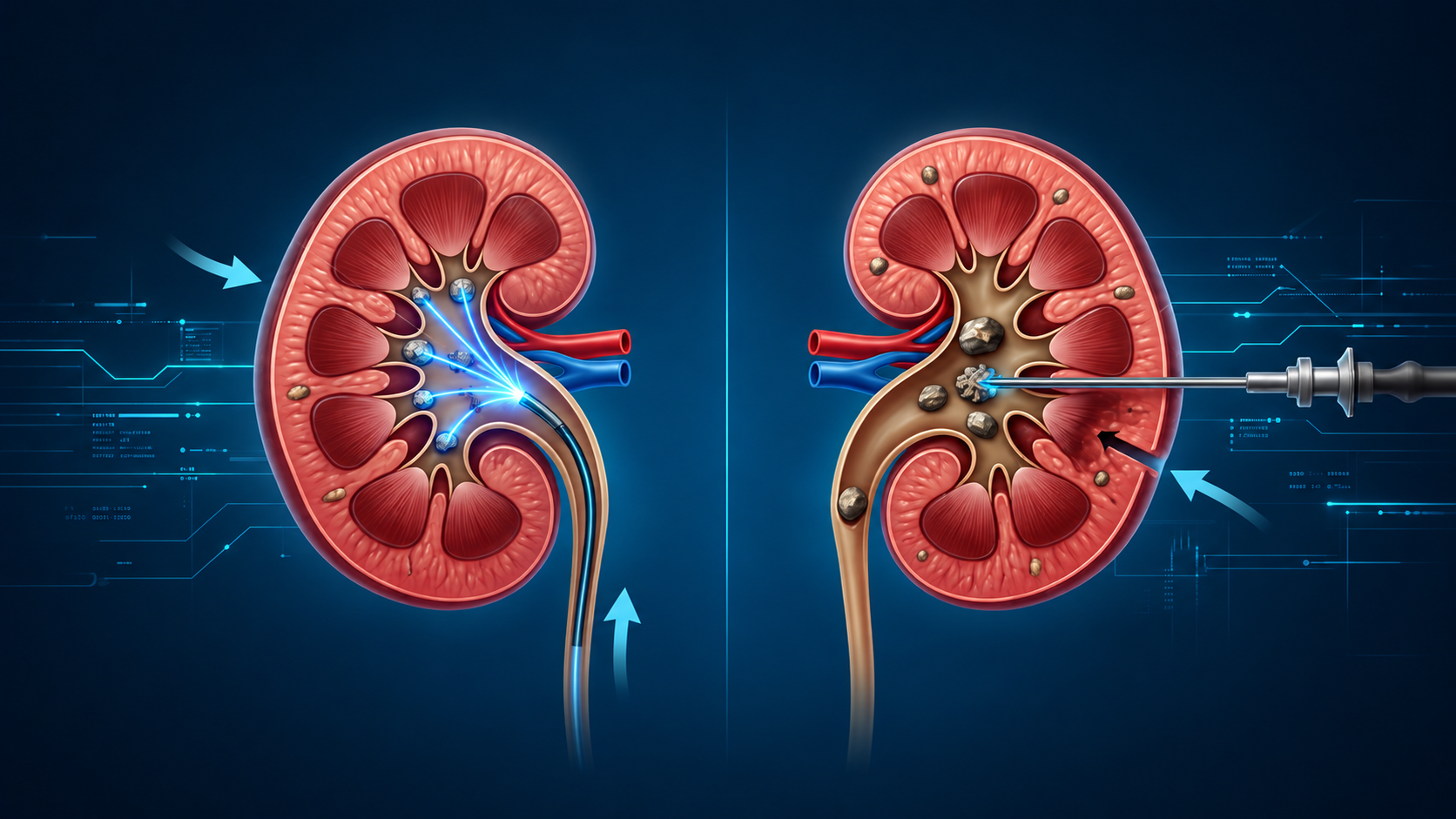
What Is RIRS?
RIRS (Retrograde Intrarenal Surgery) is an advanced laser-based kidney stone treatment where a flexible scope is passed through the natural urinary passage to reach the kidney.
A high-precision laser is then used to break the stone into tiny fragments.
Since the procedure uses the body's natural urinary tract, there are:
- No external cuts
- No large incisions
- Minimal bleeding
- Faster recovery
RIRS is considered one of the most advanced forms of kidney stone laser surgery available today.
What Is PCNL?
PCNL (Percutaneous Nephrolithotomy) is a minimally invasive procedure commonly used for larger kidney stones.
In this surgery:
- A small incision is made in the back
- A tract is created directly into the kidney
- Special instruments are used to remove large stones
PCNL allows direct access to the kidney and is highly effective for removing bulky stone burdens.
It is commonly recommended for stones larger than 2 cm.
RIRS vs PCNL: Understanding the Difference
| Feature | RIRS | PCNL |
|---|---|---|
| Procedure Type | Natural urinary passage | Small incision in the back |
| Stone Removal Method | Laser fragmentation | Direct stone extraction |
| Ideal Stone Size | Small to medium stones | Large stones |
| Bleeding Risk | Very low | Slightly higher |
| Hospital Stay | Usually shorter | Slightly longer |
| Recovery Time | Faster | Moderate |
| Pain After Surgery | Minimal | Mild to moderate |
| Scar Formation | No visible scar | Small scar |
| Suitable for Multiple Large Stones | Limited | Highly effective |
When Is RIRS Better?
RIRS is usually preferred when:
Stones Are Small or Medium Sized
RIRS works very effectively for:
- Stones less than 2 cm
- Stones located inside the kidney
- Difficult-to-access kidney stones
Patients Want Faster Recovery
Since there are no cuts or stitches:
- Recovery is faster
- Pain is less
- Hospital stay is shorter
Patients Have Higher Surgical Risk
RIRS may be suitable for:
- Elderly patients
- Patients on blood thinners
- Individuals who need minimally invasive treatment
Multiple Small Stones
Flexible scopes allow surgeons to access different areas of the kidney and treat multiple stones during the same procedure.
When Is PCNL Better?
PCNL is often considered the gold standard for large kidney stones.
Stones Larger Than 2 cm
Large stones usually require direct removal because laser fragmentation alone may take longer.
PCNL provides:
- Better stone clearance
- Faster removal of large stone burden
Staghorn Stones
Complex stones occupying large portions of the kidney are often treated using PCNL.
Hard Stones
Certain dense stones may be more effectively treated with PCNL.
Recurrent Large Stone Disease
Patients with repeated large stone formation may benefit from PCNL due to higher stone clearance rates.
Which Procedure Has Better Success Rates?
Both procedures have excellent success rates when selected appropriately.
RIRS Success Rate
RIRS offers excellent stone clearance for:
- Small stones
- Moderate-sized stones
- Difficult kidney locations
PCNL Success Rate
PCNL generally achieves higher clearance rates for:
- Large stones
- Multiple stones
- Complex stone burdens
The best procedure depends on the patient's individual condition rather than choosing one procedure for everyone.
Recovery After RIRS vs PCNL
Recovery After RIRS
Most patients experience:
- Minimal discomfort
- Early discharge
- Quick return to normal activities
Patients can usually resume routine work within a few days.
Recovery After PCNL
Recovery may involve:
- Slightly longer hospital stay
- Mild soreness near the incision site
- Gradual return to activities
Most patients recover well within a few weeks.
Advantages of RIRS
Scarless Procedure
No external incision is required.
Minimal Pain
Postoperative discomfort is usually lower.
Faster Recovery
Patients can return to daily activities sooner.
Lower Bleeding Risk
The procedure is highly safe with minimal tissue trauma.
Advanced Laser Technology
Modern laser systems can precisely break stones into fine dust particles.
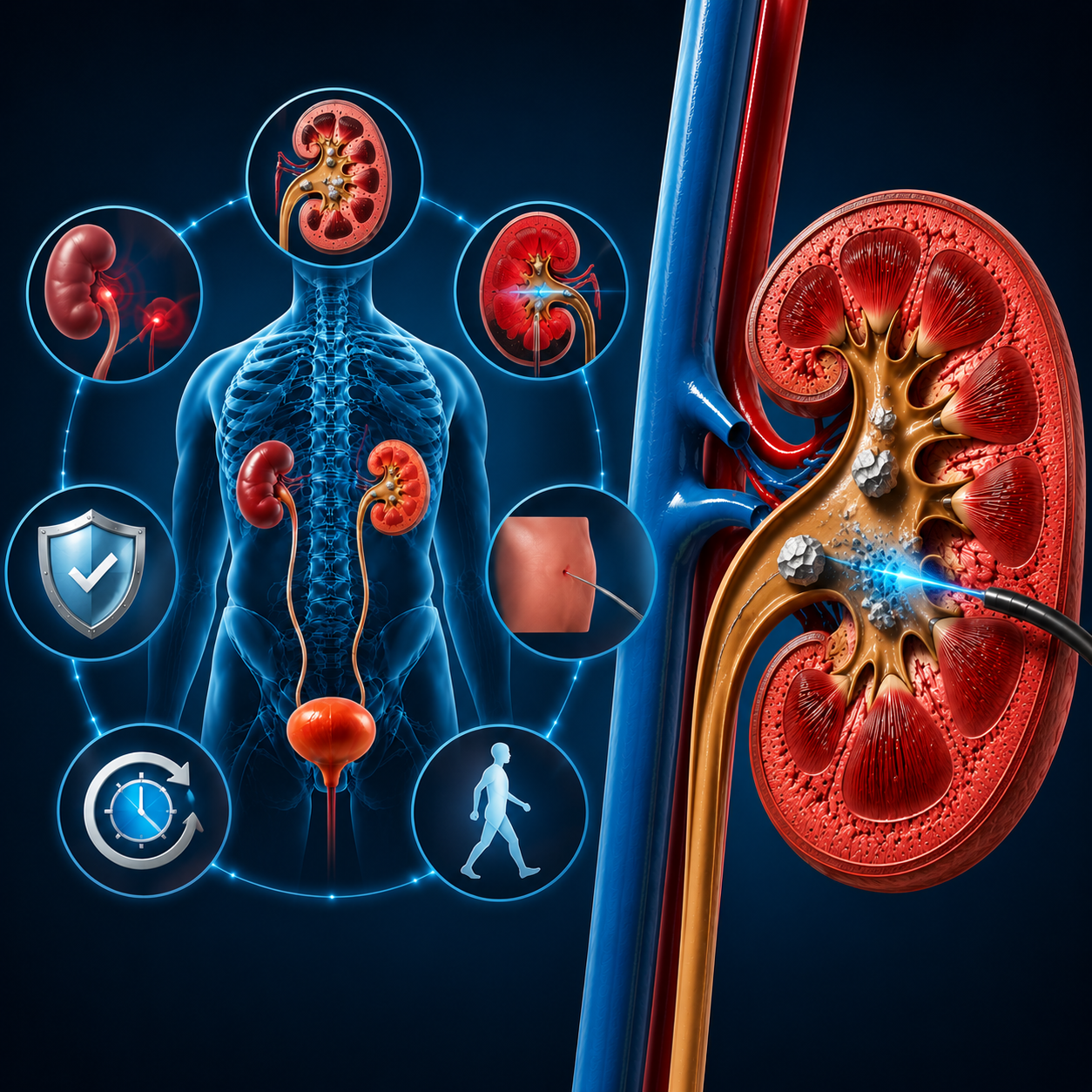
Advantages of PCNL
Best for Large Stones
Highly effective for stones larger than 2 cm.
Higher Stone Clearance
Large stones can be removed directly.
Suitable for Complex Cases
Works well for difficult and extensive stone disease.
Reduced Need for Multiple Procedures
Large stone burdens can often be treated in a single sitting.
Is Kidney Stone Laser Surgery Better Than Traditional Surgery?
Modern kidney stone laser surgery has significantly reduced the need for open surgery.
Benefits include:
- Smaller incisions
- Less pain
- Faster healing
- Minimal blood loss
- Shorter hospital stay
- Better cosmetic results
Most kidney stone cases today can be managed through advanced endoscopic and laser techniques without traditional open surgery.
MITR Urology Associates specializes in advanced laser stone surgery, endourology, and minimally invasive kidney stone treatment in Navi Mumbai. The center offers procedures including laser stone surgery, RIRS, PCNL, ureteroscopy, and other modern stone management techniques.
How Does a Urologist Decide Between RIRS and PCNL?
The decision depends on:
- Stone size
- Stone location
- Number of stones
- Kidney anatomy
- Previous surgeries
- Presence of infection
- Overall patient health
A detailed CT scan and evaluation help determine the most effective treatment option.
Why Choose MITR Urology Associates for Kidney Stone Surgery in Navi Mumbai?
MITR Urology Associates offers comprehensive stone management using advanced technology and minimally invasive techniques.
Key strengths include:
- Advanced kidney stone laser surgery
- Expertise in RIRS and PCNL
- Modern endourology equipment
- Minimally invasive treatment approach
- Experienced urology specialists
- Faster recovery protocols
- Comprehensive kidney stone care
The center is recognized for advanced laser surgery for urinary stones and modern keyhole procedures for kidney stone removal in Navi Mumbai.
Conclusion
Both RIRS and PCNL are highly effective kidney stone surgery options, but the best procedure depends on the size and complexity of the stone.
RIRS is generally preferred for small to medium-sized stones because it is scarless, minimally invasive, and offers quicker recovery. PCNL remains the preferred option for large or complex kidney stones because it provides superior stone clearance.
Consulting an experienced urologist is essential to determine the safest and most effective treatment plan. With modern kidney stone laser surgery and advanced minimally invasive techniques, patients can now achieve excellent outcomes with less pain and faster recovery.
Copyright © All Rights Reserved, By MITR Urology Associates