Welcome to MITR Hospital
Laser Kidney Stone Surgery: Procedure, Recovery & Benefits
Kidney stones can cause severe pain and serious urinary problems if not treated on time. Fortunately, modern urology now offers advanced minimally invasive solutions that are safer, faster, and more effective than traditional open surgery. One of the most advanced treatments available today is kidney stone laser surgery.
Laser treatment has transformed kidney stone management by allowing precise stone removal with minimal pain, smaller incisions, and faster recovery. At MITR Urology Associates, advanced laser technology is used for the treatment of kidney and ureteric stones with excellent patient outcomes.
What Is Kidney Stone Laser Surgery?
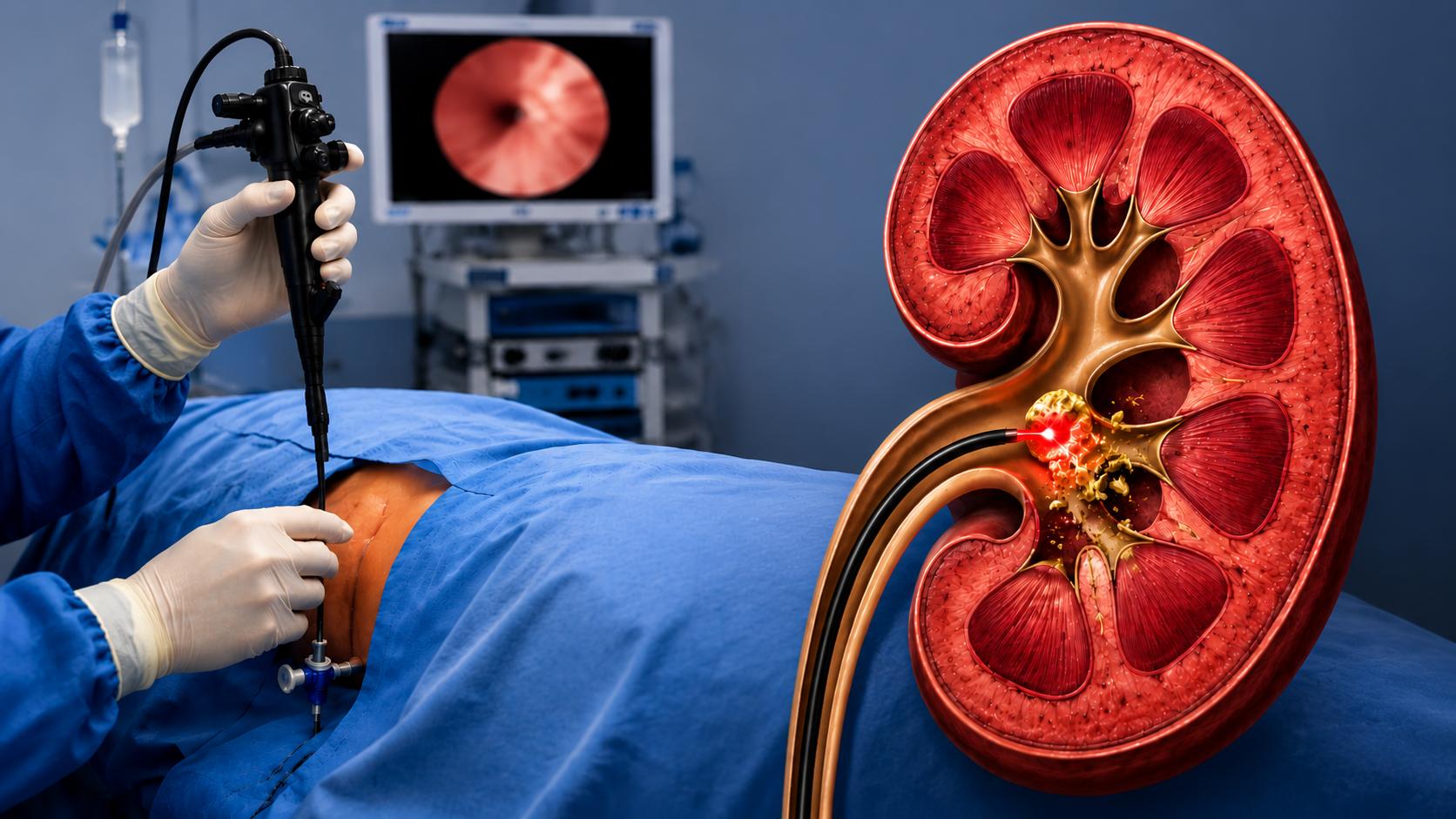
Kidney stone laser surgery is a minimally invasive procedure used to break kidney stones into tiny fragments using a high-energy laser. The procedure is usually performed using a thin endoscope passed through the natural urinary passage, avoiding large cuts or stitches.
The laser energy breaks the stone into smaller particles, which are either removed immediately or passed naturally through urine over time.
This modern technique is commonly used for:
- Kidney stones
- Ureteric stones
- Bladder stones
- Recurrent urinary stones
Laser surgery is highly effective for stones that are painful, large, blocked, or not passing naturally.
When Is Laser Surgery Recommended?
A urologist may recommend kidney stone laser surgery if:
- The stone is too large to pass naturally
- Severe pain persists
- There is blockage in urine flow
- Infection is present
- Blood appears in urine
- Stones recur frequently
- Medicines are not effective
Laser treatment is especially useful for patients looking for faster recovery and minimal surgical trauma.
Types of Laser Kidney Stone Procedures
URSL (Ureteroscopy Laser Lithotripsy)
This procedure is commonly used for stones located in the ureter. A thin scope is inserted through the urinary passage, and the laser breaks the stone into smaller fragments. Read more about URSL procedure.
RIRS (Retrograde Intrarenal Surgery)
RIRS is an advanced laser procedure used for stones inside the kidney. Flexible scopes and laser technology allow surgeons to reach difficult areas without any external incision. Learn more about RIRS surgery.
Mini-PCNL
For larger kidney stones, Mini-PCNL combines minimally invasive access with laser fragmentation to remove stones effectively. Read more about PCNL and Mini-PCNL.
The choice of procedure depends on:
- Stone size
- Stone location
- Number of stones
- Kidney anatomy
- Infection status
Step-by-Step Procedure of Kidney Stone Laser Surgery
1. Pre-Surgery Evaluation
Before surgery, the doctor may advise:
- Blood tests
- Urine tests
- CT scan or ultrasound
- ECG and fitness evaluation
These tests help determine the safest treatment plan.
2. Anesthesia
The procedure is usually performed under spinal or general anesthesia, ensuring patient comfort.
3. Endoscopic Access
A thin telescope-like instrument is passed through the urinary passage to reach the stone.
4. Laser Stone Fragmentation
A high-precision laser breaks the stone into tiny pieces. The fragments are either removed or allowed to pass naturally.
5. Stent Placement (If Needed)
In some cases, a temporary stent may be placed to improve urine drainage and reduce swelling.
6. Recovery and Discharge
Most patients can walk within hours after surgery and are discharged within 24–48 hours depending on the procedure.
Benefits of Kidney Stone Laser Surgery
- Minimally Invasive Treatment: Laser surgery avoids large cuts and significantly reduces surgical trauma.
- Less Pain: Compared to traditional surgery, patients experience much less postoperative pain.
- Faster Recovery: Most patients resume daily activities much earlier.
- Shorter Hospital Stay: Many laser stone procedures require only a short hospital stay.
- High Precision: The laser precisely targets stones while minimizing damage to nearby tissues.
- Reduced Bleeding Risk: Laser procedures are associated with minimal bleeding and lower complication rates.
- Effective for Difficult Stones: Laser technology can treat stones located in hard-to-reach areas inside the kidney.
Recovery After Laser Kidney Stone Surgery
Recovery is usually smooth and quick, especially with minimally invasive techniques.
Common Temporary Symptoms
Patients may experience:
- Mild burning urination
- Slight blood in urine
- Mild discomfort
- Increased frequency of urination
These symptoms usually improve within a few days.
Recovery Timeline
- First 24–48 Hours: Rest is advised, fluid intake should increase, and mild discomfort may occur.
- Within One Week: Most normal activities can resume, and pain significantly improves.
- After 2–3 Weeks: Complete internal healing usually occurs, and stents, if placed, may be removed.
Recovery may vary depending on stone size, type of procedure, overall health, and presence of infection.
Tips for Faster Recovery
To support smooth recovery after kidney stone laser surgery:
- Drink plenty of water
- Avoid dehydration
- Take prescribed medicines regularly
- Avoid heavy lifting for a few days
- Follow dietary advice
- Attend follow-up appointments
Proper hydration is one of the most important steps to prevent future stones.
Are There Any Risks?
- Temporary bleeding
- Urinary infection
- Mild discomfort from stent
- Rare stone recurrence
Modern laser technology has significantly reduced complications compared to traditional open surgery.
How to Prevent Kidney Stones After Surgery
Even after successful treatment, lifestyle changes are important to reduce recurrence risk.
Prevention Tips:
- Drink 2.5–3 litres of water daily
- Reduce excess salt intake
- Limit sugary beverages
- Avoid dehydration
- Maintain healthy body weight
- Follow stone-specific dietary advice
Patients with recurrent stones may require metabolic evaluation and long-term preventive care.
Why Choose MITR Urology Associates for Kidney Stone Treatment?
MITR Urology Associates offers advanced diagnosis and minimally invasive treatment for urinary stone disease using modern laser technology.
Key advantages include:
- Advanced laser kidney stone surgery
- Experienced urology specialists
- Minimally invasive procedures
- Faster recovery protocols
- Comprehensive stone management
- Personalized treatment plans
The center specializes in advanced endourology and modern stone removal procedures for patients suffering from kidney and urinary stones.
Conclusion
Kidney stones can cause intense pain and serious complications if left untreated. Modern kidney stone laser surgery provides a highly effective, minimally invasive solution with faster recovery, less pain, and excellent outcomes.
Early diagnosis and timely treatment can help prevent kidney damage and recurrent urinary problems. If you are experiencing symptoms like severe flank pain, blood in urine, or difficulty passing urine, consulting a urologist at the right time is important.
Advanced laser procedures now allow safer and more comfortable stone removal, helping patients return to normal life quickly.
Copyright © All Rights Reserved, By MITR Urology Associates