Welcome to MITR Hospital
Weak Urine Stream in Men: Causes & Treatment Options
A weak urine stream can be frustrating, especially when it takes longer than usual to empty the bladder or you need to strain to start urinating. Although an occasional change in urine flow may not be a cause for concern, a persistent weak stream can indicate an underlying urinary or prostate problem.
In older men, one of the most common causes is an enlarged prostate, also known as benign prostatic hyperplasia (BPH). However, prostate enlargement is not the only possible explanation. Urinary tract infections, urethral narrowing, bladder problems, kidney stones, and certain neurological conditions can also affect urine flow.
Understanding the possible causes and getting the right diagnosis can help prevent complications and improve urinary health.

What Is a Weak Urine Stream?
A weak urine stream means that urine comes out more slowly or with less force than it used to.
Some men may notice that:
- Urine takes longer to come out
- The stream is thinner than before
- Urine flow starts and stops
- They need to strain to urinate
- The bladder takes longer to empty
- Urine dribbles after finishing
A gradual reduction in urine flow is particularly common in men as they get older, but it should not automatically be considered a normal part of ageing.
What Causes a Weak Urine Stream in Men?
Several conditions can interfere with normal urine flow.
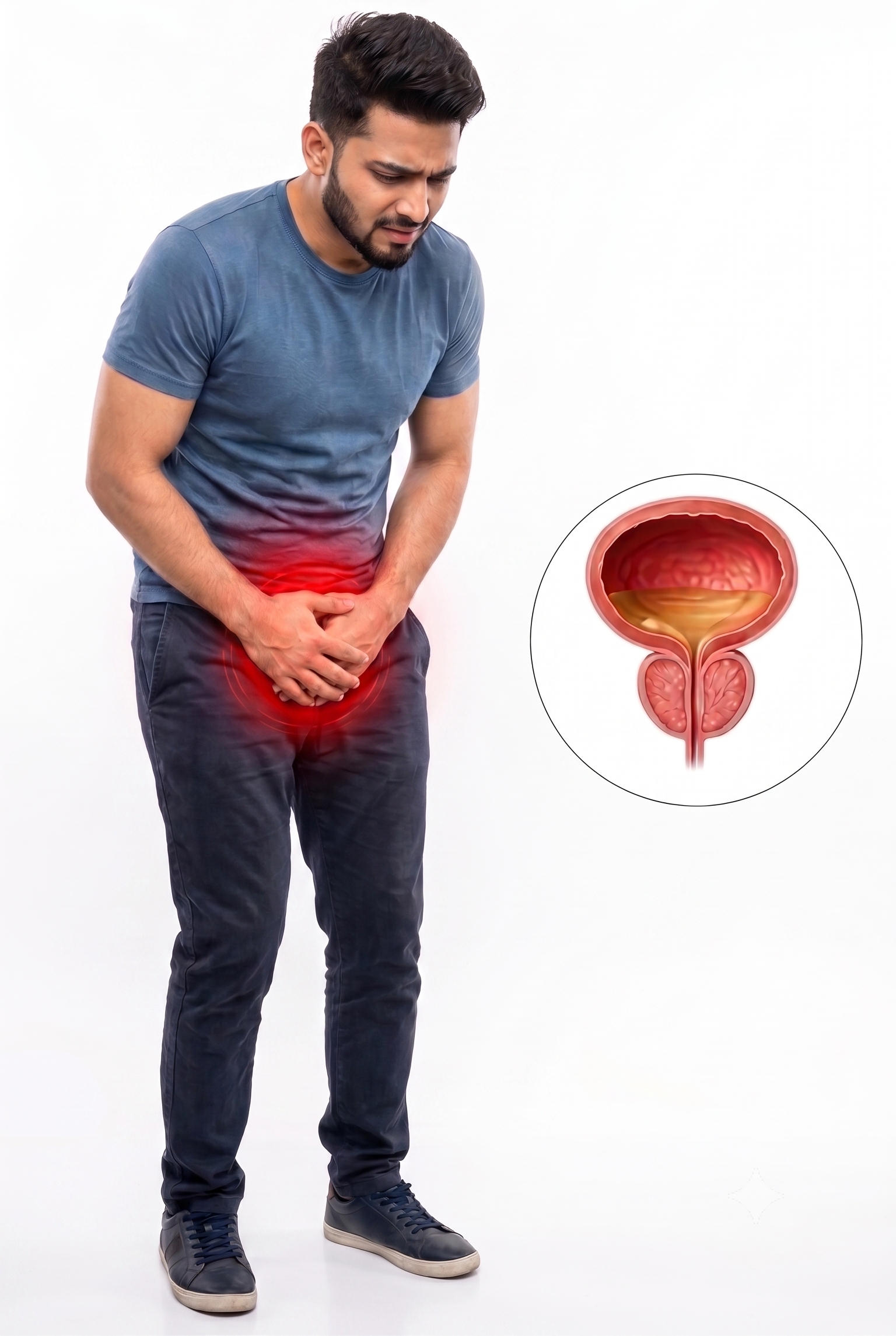
1. Enlarged Prostate (BPH)
Benign Prostatic Hyperplasia is one of the most common causes of a weak urine stream in older men.
The prostate surrounds part of the urethra. As the prostate grows, it can press against the urethra and make it harder for urine to pass.
Other symptoms may include:
- Frequent urination
- Difficulty starting urination
- Urgency
- Waking up at night to urinate
- Incomplete bladder emptying
- Dribbling after urination
2. Urethral Stricture
A urethral stricture occurs when scar tissue narrows the urethra.
It may develop after:
- Previous urinary procedures
- Injury
- Infection
- Trauma
Because the passage becomes narrower, urine may flow slowly or in a thin stream.
3. Urinary Tract Infection
A urinary tract infection can cause inflammation and irritation within the urinary system.
Symptoms may include:
- Burning while urinating
- Frequent urination
- Urinary urgency
- Lower abdominal discomfort
- Cloudy or strong-smelling urine
In some cases, inflammation can temporarily affect urine flow.
4. Bladder Problems
The bladder muscles need to contract properly to push urine through the urethra.
Conditions affecting bladder function can result in:
- Weak urine flow
- Difficulty emptying the bladder
- Frequent urination
- Urinary retention
Neurological disorders, certain medications, and long-term urinary obstruction can affect bladder function.
5. Kidney or Bladder Stones
Stones can sometimes interfere with the normal flow of urine.
Depending on their location, they may cause:
- Pain
- Blood in urine
- Difficulty urinating
- Urinary urgency
A stone that blocks urine flow may require prompt treatment.
6. Prostate Inflammation
Prostatitis, or inflammation of the prostate, can cause urinary symptoms.
Men may experience:
- Weak urine stream
- Pain during urination
- Pelvic discomfort
- Frequent urination
- Fever in cases caused by infection
Treatment depends on the underlying cause.
7. Neurological Conditions
The nerves controlling the bladder and urinary sphincter play an important role in normal urination.
Conditions affecting the nervous system may interfere with bladder emptying and lead to weak urine flow.
Examples include certain spinal cord disorders, neurological diseases, and nerve damage associated with conditions such as diabetes.
Symptoms That May Occur Along With a Weak Stream
A weak urine stream may occur alone or alongside other urinary symptoms.
Watch for:
- Difficulty starting urination
- Frequent urination
- Urgency
- Nighttime urination
- Interrupted urine flow
- Straining to urinate
- Feeling that the bladder is not empty
- Dribbling after urination
- Pain or burning while urinating
- Blood in the urine
The combination of symptoms can provide important clues about the underlying cause.

When Should You See a Urologist?
A persistent weak urine stream deserves medical evaluation, particularly if symptoms are becoming worse.
Consult a urologist if you experience:
- A gradually weakening urine stream
- Difficulty starting urination
- Frequent nighttime urination
- Incomplete bladder emptying
- Recurrent urinary infections
- Blood in the urine
- Persistent pelvic discomfort
- Increasing urinary urgency
You should seek urgent medical attention if you suddenly become unable to pass urine. Acute urinary retention can require immediate treatment.
How Is a Weak Urine Stream Diagnosed?
Your urologist will first discuss your symptoms and medical history before deciding which tests are appropriate.

Medical History and Physical Examination
Your doctor may ask about:
- When the symptoms started
- Whether they are getting worse
- Previous urinary problems
- Medications
- Previous procedures
- Other medical conditions
A prostate examination may also be performed when clinically appropriate.
Urine Tests
Urine analysis can help identify:
- Blood
- Infection
- Other abnormalities
A urine culture may be recommended if a urinary infection is suspected.
Blood Tests
Blood tests may be used to assess kidney function and, when appropriate, evaluate prostate health.
A PSA test may be recommended in selected men based on age, symptoms, risk factors, and clinical assessment.
Ultrasound
An ultrasound can provide useful information about:
- Prostate size
- Kidneys
- Bladder
- Urinary obstruction
- Residual urine after urination
Measuring the amount of urine left in the bladder after urination can help determine whether the bladder is emptying properly.
Uroflowmetry
Uroflowmetry is a simple test that measures the speed and pattern of urine flow.
The patient urinates into a specialized device that records information about the flow.
It can help doctors assess whether urinary obstruction may be contributing to the weak stream.
Cystoscopy
In selected cases, a cystoscopy may be recommended.
A thin camera is passed through the urethra to examine the urethra and bladder. This can help identify problems such as urethral narrowing or other abnormalities.
Treatment Options for Weak Urine Stream
Treatment depends on the underlying cause.
Lifestyle Changes
For mild urinary symptoms, your doctor may recommend:
- Limiting caffeine and alcohol
- Reducing excessive fluid intake before bedtime
- Maintaining a healthy weight
- Staying physically active
- Avoiding prolonged urine holding
Lifestyle changes may help manage symptoms but may not be sufficient when significant obstruction is present.

Medication for Enlarged Prostate
If BPH is responsible for the weak urine stream, medications may be prescribed.
Depending on the patient's condition, medicines can:
- Relax the muscles around the prostate and bladder neck
- Improve urine flow
- Reduce prostate size over time
Your doctor will select medication based on your symptoms and prostate characteristics.
Treatment for Urethral Stricture
A urethral stricture may require a procedure to widen or reconstruct the narrowed section of the urethra.
The appropriate treatment depends on the location, length, severity, and recurrence of the stricture.
Treatment for Urinary Infection
If a bacterial infection is responsible, appropriate antibiotics may be prescribed.
Completing the recommended course and attending follow-up appointments are important, particularly when symptoms recur.
Treatment for Kidney or Bladder Stones
Depending on the size and location of the stone, treatment may include:
- Observation
- Medication
- Ureteroscopy
- Laser stone surgery
- RIRS
- PCNL
The treatment is selected based on the individual stone characteristics.
Prostate Surgery for Persistent Symptoms
If an enlarged prostate causes significant urinary obstruction and medications are not providing sufficient relief, a procedure may be recommended.
Treatment options can include:
- TURP
- Laser prostate surgery
- Other minimally invasive prostate procedures
These procedures remove or reduce the tissue causing obstruction and can significantly improve urine flow in appropriately selected patients.
Can a Weak Urine Stream Affect the Kidneys?

In some cases, yes.
If severe urinary obstruction remains untreated, the bladder may not empty properly. Persistent obstruction can increase pressure within the urinary system and, in severe cases, affect the kidneys.
Potential complications include:
- Urinary retention
- Recurrent urinary infections
- Bladder stones
- Kidney swelling
- Reduced kidney function
This is why persistent urinary symptoms should be evaluated rather than ignored.
Can Weak Urine Flow Be Prevented?
Not every cause can be prevented, but several habits can support urinary health.
These include:
- Staying adequately hydrated
- Maintaining a healthy weight
- Exercising regularly
- Managing diabetes
- Avoiding smoking
- Seeking timely treatment for urinary infections
- Attending regular health check-ups
Men with prostate-related symptoms should also discuss appropriate monitoring and treatment with their urologist.
Why Early Treatment Matters
A weak urine stream may initially seem like a minor inconvenience, but it can sometimes be a sign of progressive urinary obstruction.
Early evaluation can help:
- Identify the underlying cause
- Improve urinary symptoms
- Prevent urinary retention
- Reduce the risk of recurrent infections
- Protect bladder function
- Reduce the risk of kidney complications
Getting evaluated early can also help determine whether medication, lifestyle changes, or a procedure is appropriate.
Why Choose MITR Urology Associates?
MITR Urology Associates provides comprehensive evaluation and treatment for men experiencing weak urine flow and other urinary problems.
The evaluation may include:
- Detailed urinary symptom assessment
- Prostate evaluation
- Urine and blood tests
- Ultrasound and uroflowmetry
- Evaluation for urinary obstruction
- Medical treatment for BPH
- TURP and minimally invasive prostate procedures
- Laser prostate surgery
- Treatment for kidney and urinary stones
Treatment is personalized according to the underlying cause, severity of symptoms, prostate size, bladder function, and overall health.
Conclusion
A weak urine stream in men can have several causes, with an enlarged prostate being one of the most common. However, urinary infections, urethral strictures, stones, bladder disorders, prostate inflammation, and neurological conditions can also affect urine flow.
Persistent changes in urination should not simply be attributed to ageing. If you have noticed a weakening urine stream, difficulty emptying your bladder, frequent nighttime urination, or other urinary symptoms, book an appointment with the experienced urology team at MITR Urology Associates for a comprehensive evaluation and personalized treatment plan.
Take Charge of Your Health Today
Book a Consultation with a SpecialistCopyright © All Rights Reserved, By MITR Urology Associates