Welcome to MITR Hospital
Partial vs Radical Nephrectomy: Which Kidney Surgery Is Better?
When a kidney tumour or kidney cancer is diagnosed, surgery may be recommended depending on the size, location and characteristics of the tumour, as well as the patient's overall health and kidney function. Two commonly performed surgical approaches are partial nephrectomy and radical nephrectomy.
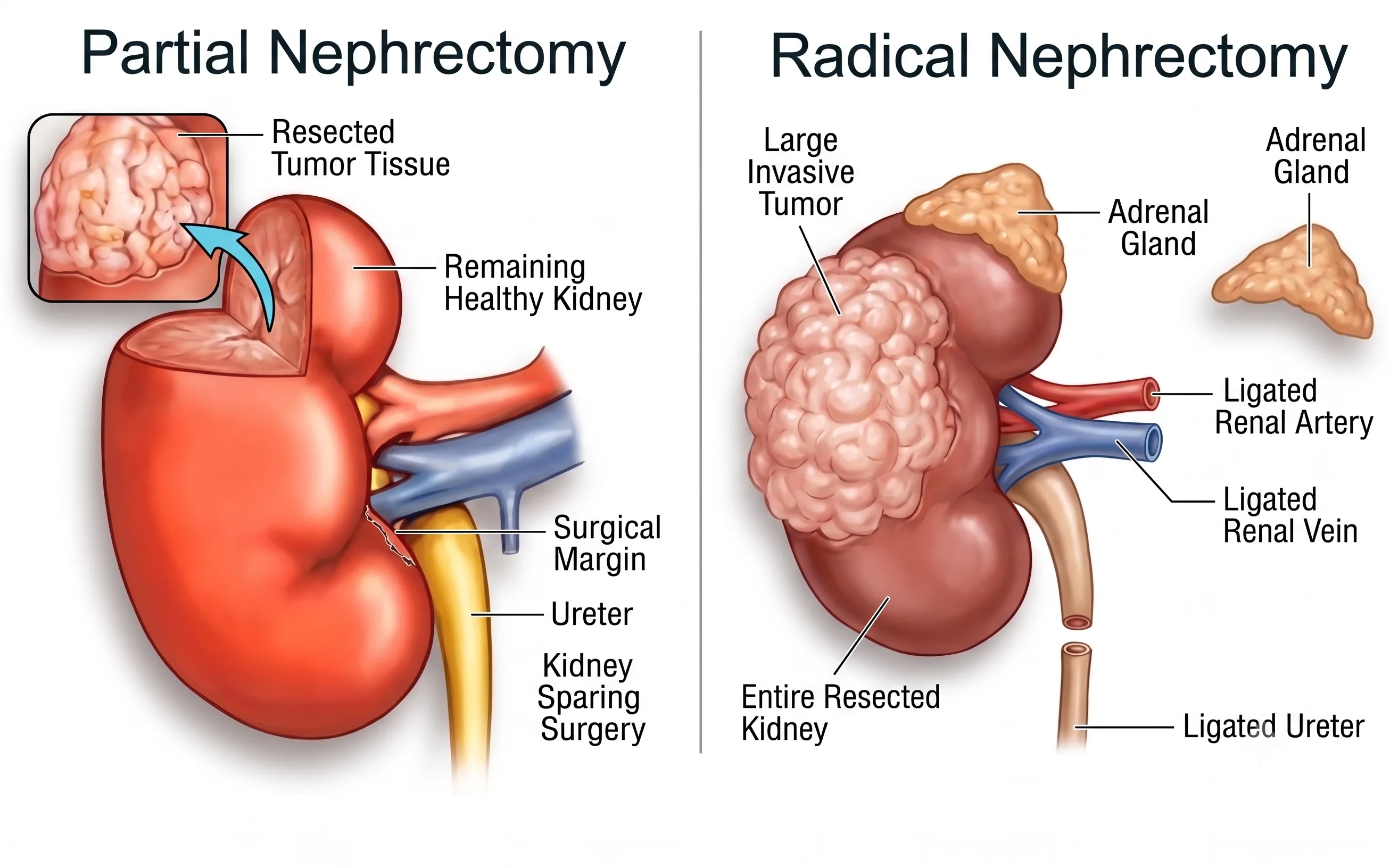
Both procedures aim to remove cancerous tissue, but they differ significantly in how much of the kidney is removed. A partial nephrectomy removes the tumour while preserving as much healthy kidney tissue as possible. A radical nephrectomy removes the entire affected kidney, along with surrounding tissues when necessary.
So, which kidney surgery is better?
There is no single answer for every patient. The choice depends on the individual tumour, kidney anatomy, kidney function and other health factors. Understanding the differences can help patients have a more informed discussion with their urologist.
What Is a Partial Nephrectomy?
A partial nephrectomy, sometimes called kidney-sparing surgery, involves removing the tumour along with a small margin of surrounding healthy tissue while leaving the remaining kidney intact.
The goal is to completely remove the tumour while preserving as much functioning kidney tissue as safely possible.
Partial nephrectomy may be considered when:
- The tumour is relatively small and localised
- The tumour is located in a position that allows safe removal
- Preserving kidney function is particularly important
- The patient has a single functioning kidney
- The other kidney has reduced function
- There is a risk of future kidney problems
Depending on the patient's condition and the surgeon's expertise, partial nephrectomy may be performed through open, laparoscopic or robotic techniques.
What Is a Radical Nephrectomy?
A radical nephrectomy involves removing the entire kidney containing the tumour. Depending on the circumstances, the surgeon may also remove surrounding fatty tissue and other nearby structures.
This approach may be recommended when preserving the kidney is technically difficult or when the tumour is large, complex or positioned in a way that makes partial nephrectomy less suitable.
Radical nephrectomy may be considered when:
- The tumour is large
- The tumour involves a significant portion of the kidney
- The location makes kidney-sparing surgery difficult
- Complete tumour removal cannot be safely achieved with partial nephrectomy
- The kidney has very limited useful function
- Other tumour-related factors make complete kidney removal more appropriate
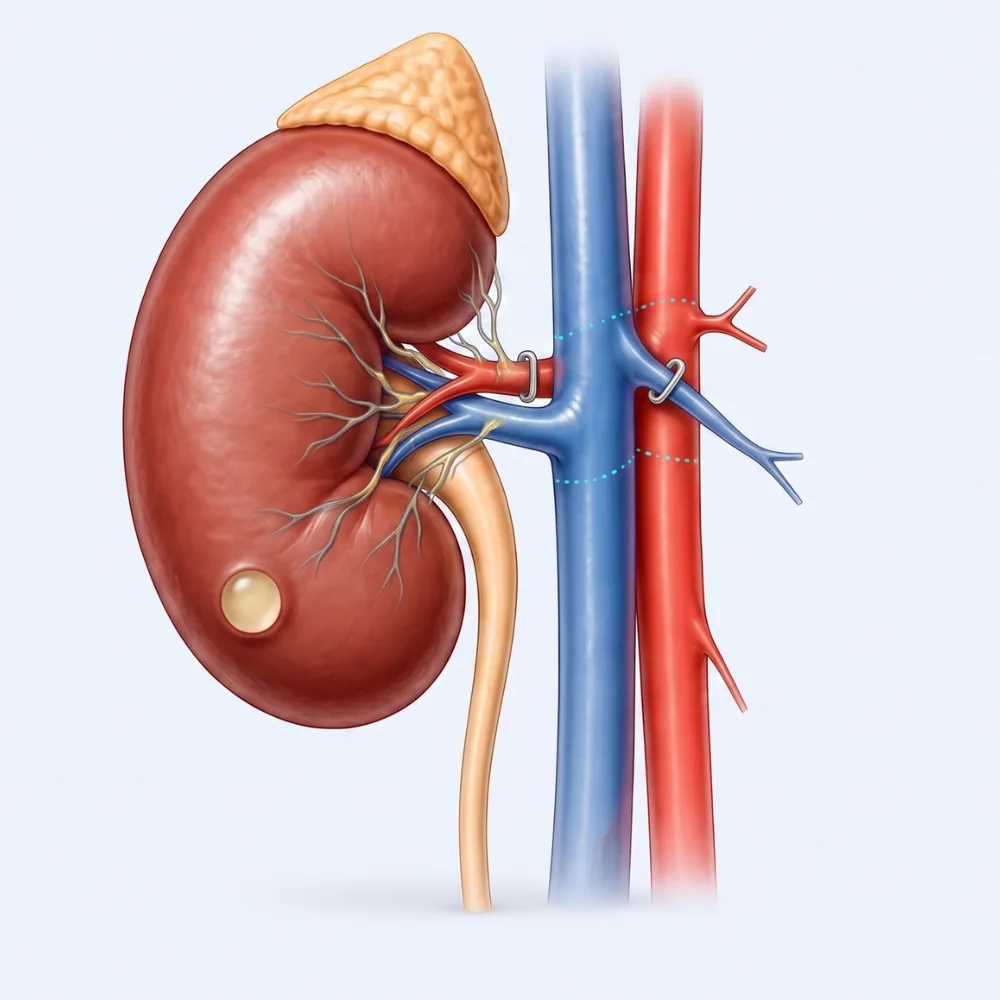
The decision is based on achieving effective cancer control while considering the patient's long-term health.
Partial vs Radical Nephrectomy: Key Differences
The biggest difference between the two procedures is the amount of kidney tissue removed.
| Feature | Partial Nephrectomy | Radical Nephrectomy |
|---|---|---|
| Kidney tissue removed | Tumour and a small amount of surrounding tissue | Entire affected kidney |
| Kidney preservation | Yes | No |
| Impact on overall kidney function | Generally preserves more kidney tissue | Remaining kidney performs most or all kidney function |
| Suitable for | Selected localised tumours | Larger or complex tumours and selected other cases |
| Surgical complexity | Can be technically demanding | May be more straightforward in some cases |
| Long-term kidney function considerations | Often an important advantage | Requires adequate function in the remaining kidney |
However, the choice should never be made based on these differences alone. A procedure that preserves the kidney is not automatically safer or more appropriate if the tumour cannot be completely and safely removed.
Which Surgery Is Better for Kidney Cancer?
For appropriately selected localised kidney tumours, partial nephrectomy is often preferred when it can achieve complete tumour removal while preserving kidney function.
The advantage is that more functioning kidney tissue remains after surgery. This can be particularly important for patients who already have reduced kidney function or are at increased risk of developing kidney disease.
However, partial nephrectomy is not suitable for every tumour.
If a tumour is very large, centrally located, involves important blood vessels or collecting-system structures, or cannot be safely removed while leaving a functioning kidney, radical nephrectomy may be recommended.
The priority is always safe and complete treatment of the tumour, rather than kidney preservation at any cost.
Why Preserving Kidney Function Matters
The kidneys play an important role in filtering waste products and maintaining the body's fluid and electrolyte balance. Losing one kidney does not necessarily mean a person cannot live a normal life, because the remaining kidney can often provide sufficient kidney function.
However, reduced overall kidney function can increase the risk of chronic kidney disease and related health problems in some patients.
This is one reason kidney-sparing surgery can be valuable when it is oncologically and technically appropriate.

Your urologist may consider factors such as:
- Existing kidney function
- Diabetes or high blood pressure
- Age and general health
- Function of the opposite kidney
- Tumour size and location
- Complexity of the tumour
- Whether the tumour is confined to the kidney
Is Partial Nephrectomy More Difficult Than Radical Nephrectomy?
In many cases, partial nephrectomy is technically more demanding because the surgeon must remove the tumour while preserving healthy kidney tissue and controlling bleeding.
The surgeon also needs to reconstruct the kidney when necessary and minimise the amount of time the kidney's blood supply is interrupted.
Because of this complexity, the experience of the urology team can be an important consideration when partial nephrectomy is being planned.
Advanced imaging before surgery can also help the surgical team understand the tumour's exact location and relationship with important blood vessels and structures.
Robotic Partial Nephrectomy
Robotic-assisted surgery may be used for selected patients undergoing partial nephrectomy.
With robotic technology, the surgeon controls specialised instruments that provide enhanced precision and a magnified view of the surgical field. This can be useful when the tumour is located close to important structures.
Potential advantages of minimally invasive robotic surgery may include:
- Smaller incisions
- Less postoperative discomfort in some patients
- Reduced blood loss in selected cases
- Shorter hospital stay in appropriate patients
- Faster return to routine activities for some patients
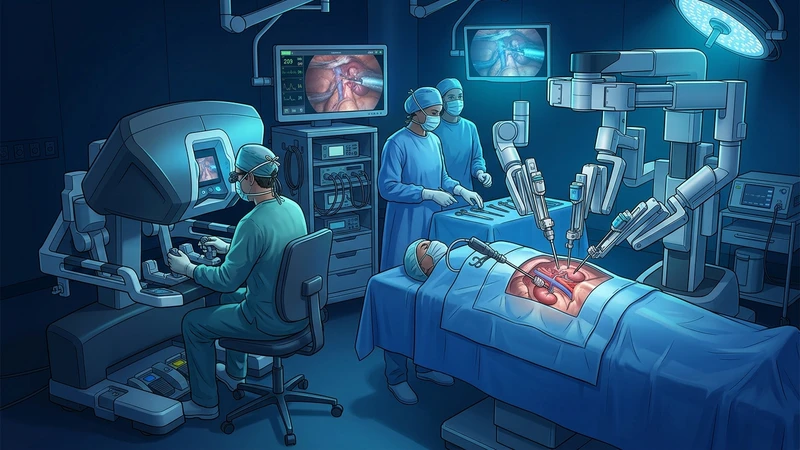
However, robotic surgery is not automatically the right option for every kidney tumour. The surgical approach should be selected according to tumour characteristics and the patient's individual circumstances.
Recovery After Partial Nephrectomy
Recovery depends on the surgical technique, tumour complexity and the patient's overall health.
After surgery, patients may experience temporary discomfort, fatigue and changes in their activity levels. The healthcare team will monitor kidney function and recovery.
Patients are generally advised to:
- Follow wound-care instructions
- Take prescribed medicines as directed
- Avoid strenuous activities until cleared by the surgeon
- Attend scheduled follow-up appointments
- Maintain adequate hydration unless advised otherwise
- Follow recommendations for monitoring kidney function
Your surgeon will provide specific instructions regarding when you can return to work, exercise and other normal activities.
Recovery After Radical Nephrectomy
Recovery following radical nephrectomy also varies depending on whether the procedure was open, laparoscopic or robotic.
Because the entire kidney is removed, long-term follow-up includes monitoring the function of the remaining kidney.
Patients may be advised to maintain healthy blood pressure, manage conditions such as diabetes if present, avoid unnecessary medications that can affect kidney function and attend recommended medical check-ups.
Living with one kidney is possible for many people, but protecting the function of the remaining kidney becomes especially important.
What Factors Determine the Choice?
Your urologist will usually consider several factors before recommending partial or radical nephrectomy.
1. Tumour Size
Smaller tumours are often more suitable for partial nephrectomy, although size alone does not determine the surgical approach.
2. Tumour Location
A tumour near the outer edge of the kidney may be easier to remove while preserving the rest of the kidney. Tumours located deep within the kidney or close to major blood vessels can be more challenging.
3. Kidney Function
If the other kidney has reduced function, preserving healthy tissue in the affected kidney may become particularly important.
4. Overall Health
Other medical conditions and the patient's ability to undergo surgery can influence treatment planning.
5. Tumour Complexity
The relationship between the tumour and blood vessels, collecting system and other kidney structures can affect whether partial nephrectomy is feasible.
6. Cancer Characteristics
The primary goal is effective cancer treatment. If preserving the kidney compromises the ability to completely remove the tumour, radical nephrectomy may be the safer option.
Does Partial Nephrectomy Have a Higher Risk of Complications?
Because partial nephrectomy involves operating directly on the kidney while preserving functioning tissue, it can carry specific risks such as bleeding, urine leakage or the need for additional treatment in uncommon situations.
Radical nephrectomy also has surgical risks, including bleeding, infection and complications related to surgery or anaesthesia.
The risk varies considerably between patients and depends on tumour complexity, surgical technique and overall health.
Your urologist should discuss the expected benefits and potential risks of the recommended procedure before surgery.
Can Kidney Cancer Return After Nephrectomy?
Kidney cancer can recur after surgery in some patients, although the risk varies according to the type and stage of cancer and other tumour characteristics.
Follow-up is therefore an important part of treatment.
Depending on the individual case, follow-up may include imaging tests, blood tests, kidney function monitoring and other assessments recommended by the treating team.
Regular follow-up allows doctors to identify possible recurrence or changes in kidney function at an earlier stage.
Questions to Ask Your Urologist Before Kidney Surgery
Before making a decision, consider asking:
- What is the size and location of my kidney tumour?
- Is partial nephrectomy technically possible in my case?
- Can the tumour be completely removed while preserving kidney tissue?
- What are the benefits and risks of partial versus radical nephrectomy for me?
- How is my current kidney function?
- How will surgery affect my kidney function in the long term?
- Would robotic or laparoscopic surgery be appropriate?
- What can I expect during recovery?
- What follow-up will I need after surgery?
These questions can help you understand why a particular surgical approach has been recommended.
The Bottom Line: Partial or Radical Nephrectomy?
Neither partial nor radical nephrectomy is universally "better." The appropriate procedure depends on the tumour and the patient's individual health.
Partial nephrectomy can preserve healthy kidney tissue and is often preferred for suitable localised tumours when complete and safe tumour removal is possible.
Radical nephrectomy may be the better option when the tumour is large, complex or positioned in a way that makes kidney-sparing surgery unsuitable.
The most important goal is to achieve effective tumour control while preserving kidney function whenever it can be done safely.
If you have been diagnosed with a kidney tumour or have been advised to undergo nephrectomy, an experienced urologist can assess your scans, kidney function and overall health before recommending the most appropriate approach.
Consult a Urology Specialist
Choosing between partial and radical nephrectomy is an important decision that should be personalised to your condition. Book an appointment with the experienced urology team at MITR Urology Associates to discuss your diagnosis, surgical options and the most appropriate treatment approach for your kidney tumour.
Take Charge of Your Health Today
Book a Consultation with a SpecialistCopyright © All Rights Reserved, By MITR Urology Associates