Welcome to MITR Hospital
Laser Prostate Surgery vs Traditional Surgery: Which Is Better?
An enlarged prostate, also known as Benign Prostatic Hyperplasia (BPH), is a common condition that affects many men as they age. While medications can help manage mild symptoms, surgery may be recommended when urinary problems become severe or begin affecting quality of life.
Today, patients have more than one surgical option. Traditional prostate surgery has been performed successfully for decades, while modern laser procedures offer a minimally invasive alternative with several potential benefits.
If you are considering prostate surgery in Mumbai, understanding the differences between laser and traditional surgery can help you make an informed decision in consultation with your urologist.
When Is Prostate Surgery Needed?
Surgery is usually recommended when an enlarged prostate causes symptoms that significantly interfere with daily life or when medications no longer provide adequate relief.
Common reasons for surgery include:
- Frequent urination
- Difficulty starting urination
- Weak urine stream
- Interrupted urine flow
- Feeling that the bladder is not empty
- Recurrent urinary tract infections
- Urinary retention
- Bladder stones caused by prostate enlargement
- Kidney problems resulting from long-term urinary obstruction
Your urologist will recommend the most appropriate procedure based on your symptoms, prostate size, and overall health.
What Is Traditional Prostate Surgery?
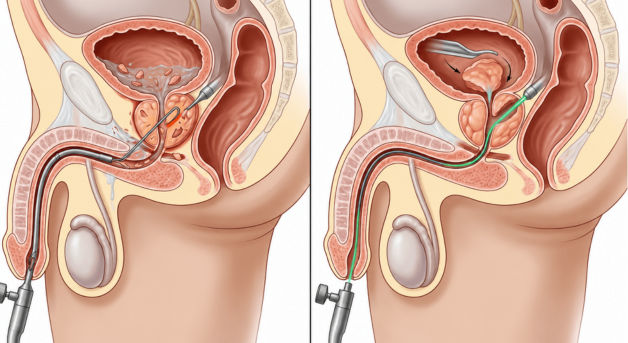
Traditional surgery refers to procedures that remove or reduce the enlarged prostate tissue to improve urine flow.
The most commonly performed traditional procedure is:
- TURP (Transurethral Resection of the Prostate)
During TURP:
- A special instrument is inserted through the urethra.
- Excess prostate tissue is removed using an electrical loop.
- No external incision is required.
TURP has been considered the gold standard treatment for moderate to severe BPH for many years and continues to provide excellent long-term results.
What Is Laser Prostate Surgery?
Laser prostate surgery uses concentrated laser energy to remove, vaporize, or enucleate enlarged prostate tissue without making external cuts.
Common laser procedures include:
- Laser vaporization of the prostate
- Laser enucleation of the prostate
- Other advanced laser-based techniques
The laser precisely targets excess tissue while minimizing damage to surrounding structures.
Laser surgery has become increasingly popular because of its minimally invasive nature and faster recovery.
Laser Prostate Surgery vs Traditional Surgery
| Feature | Laser Surgery | Traditional Surgery |
|---|---|---|
| Procedure | Laser energy removes or vaporizes enlarged prostate tissue with high precision. | Excess tissue is removed using surgical instruments during procedures such as TURP. Both methods aim to improve urine flow and relieve urinary symptoms. |
| Incisions | Both laser surgery and TURP are generally performed through the urethra without external cuts. However, laser procedures often cause less tissue trauma because they use focused laser energy instead of mechanical tissue removal. |
|
| Bleeding | One of the biggest advantages of laser surgery is reduced bleeding. Laser energy seals blood vessels during treatment, making it particularly beneficial for:
|
Traditional surgery may involve slightly more bleeding, although it remains a safe and effective procedure. |
| Hospital Stay | Laser prostate surgery often allows:
|
Patients undergoing TURP may require a slightly longer hospital stay depending on recovery. |
| Recovery Time | Recovery after laser surgery is generally quicker because there is less tissue damage. Many patients resume routine activities sooner compared with traditional surgery. Recovery timelines vary depending on:
|
|
| Catheter Duration | Patients undergoing laser surgery often require a urinary catheter for a shorter period. | Following traditional surgery, the catheter may remain in place slightly longer depending on healing and urinary function. |
| Risk of Bleeding | Laser surgery generally carries a lower risk of bleeding due to the laser's ability to seal blood vessels during treatment. This can make recovery more comfortable for many patients. |
|
| Long-Term Results | Both laser surgery and TURP provide excellent long-term relief from urinary symptoms. The choice between procedures depends on:
|
|
Benefits of Laser Prostate Surgery
Laser procedures offer several advantages.
Minimally Invasive
No external incision is required.
Less Blood Loss
Laser technology seals blood vessels as tissue is removed.
Faster Recovery
Patients often return to normal daily activities sooner.
Shorter Hospital Stay
Many patients are discharged earlier than with traditional procedures.
Reduced Postoperative Discomfort
Less tissue trauma may contribute to a more comfortable recovery.
Suitable for Certain High-Risk Patients
- Take blood-thinning medications
- Have bleeding disorders
- Are older adults with additional medical conditions
Benefits of Traditional Surgery
Despite the advantages of laser technology, traditional procedures such as TURP remain highly effective.
Benefits include:
- Proven long-term success
- Excellent symptom relief
- Widely available
- Effective for moderate to severe prostate enlargement
- Well-established safety profile
TURP continues to be an excellent treatment option for many patients.
Which Procedure Is Better?
There is no single procedure that is best for everyone.
Laser surgery may be preferred for:
- Patients at higher risk of bleeding
- Those seeking faster recovery
- Individuals with certain medical conditions
Traditional surgery may be recommended for:
- Specific prostate sizes
- Certain anatomical considerations
- Cases where TURP remains the most appropriate option
The best treatment depends on a detailed medical evaluation rather than choosing one technique over another.
Preparing for Prostate Surgery
Before surgery, your doctor may recommend:
- Blood tests
- Urine analysis
- Ultrasound
- PSA testing when appropriate
- ECG and fitness assessment
You may also receive instructions regarding medications, fasting, and postoperative care.
Proper preparation helps ensure a smooth surgical experience.
Recovery After Prostate Surgery
Most patients notice gradual improvement in urinary symptoms over the following weeks.
During recovery:
- Drink adequate water
- Avoid heavy lifting
- Take prescribed medications
- Prevent constipation
- Attend follow-up appointments
Temporary burning during urination or mild blood in the urine may occur and usually improves as healing progresses.
Possible Risks
Both laser and traditional prostate surgery are considered safe when performed by experienced urologists.
Potential risks include:
- Temporary bleeding
- Urinary tract infection
- Temporary urinary incontinence
- Retrograde ejaculation
- Rare need for additional treatment
Your surgeon will discuss the potential benefits and risks before the procedure.
Choosing the Right Prostate Surgery
Several factors influence the choice of surgery, including:
- Severity of symptoms
- Size of the prostate
- Age
- Overall health
- Current medications
- Personal preferences
A thorough consultation with a urologist helps determine the most suitable treatment option.
Why Choose MITR Urology Associates?
MITR Urology Associates offers comprehensive evaluation and advanced treatment for enlarged prostate using modern urological techniques.
Patients benefit from:
- Experienced urology specialists
- Personalized treatment planning
- Advanced minimally invasive procedures
- Modern laser technology
- Comprehensive postoperative care
- Long-term follow-up
For individuals considering prostate surgery in Mumbai, the team focuses on selecting the treatment approach that best matches the patient's condition and lifestyle.
Conclusion
Both laser prostate surgery and traditional procedures such as TURP are highly effective treatments for enlarged prostate. Laser surgery offers advantages such as reduced bleeding, quicker recovery, and shorter hospital stays, while traditional surgery continues to provide reliable and long-lasting symptom relief.
The ideal treatment depends on your prostate size, overall health, and the severity of your symptoms. Consulting an experienced urologist is the best way to determine which surgical option is right for you. If you're experiencing persistent urinary problems, don't delay seeking medical advice. Book an appointment with the specialists at MITR Urology Associates for a comprehensive evaluation and personalized guidance on the most suitable prostate surgery option for your needs.
Copyright © All Rights Reserved, By MITR Urology Associates