Welcome to MITR Hospital
Erectile Dysfunction and Diabetes: What Is the Connection?
Diabetes can affect many parts of the body, including the heart, kidneys, eyes and nerves. But one complication that men may be uncomfortable discussing is erectile dysfunction (ED).
Erectile dysfunction means having difficulty getting or maintaining an erection firm enough for satisfactory sexual activity. For men with diabetes, ED can sometimes be an early indication that high blood sugar is affecting the blood vessels and nerves involved in sexual function.
The good news is that erectile dysfunction is treatable in many men. Identifying the underlying cause and managing diabetes and other health conditions can improve sexual health and overall wellbeing.
For men looking for Erectile Dysfunction Treatment in Navi Mumbai, understanding the connection between diabetes and ED is an important first step toward seeking appropriate care.

How Does Diabetes Cause Erectile Dysfunction?
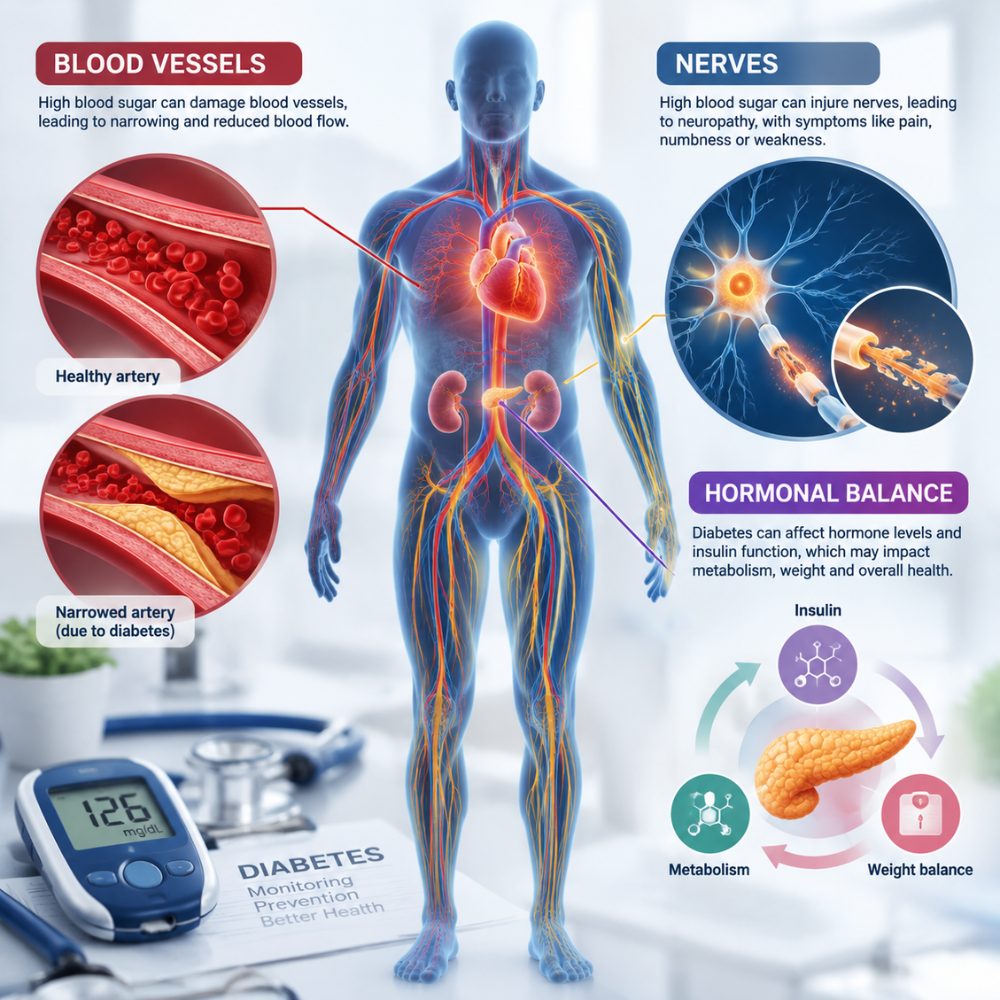
An erection depends on healthy blood flow, functioning nerves, hormones and psychological wellbeing. Diabetes can affect several of these systems simultaneously.
1. Damage to Blood Vessels
Persistently high blood sugar can damage blood vessels over time.
For an erection to occur, the penis needs sufficient blood flow. If the blood vessels supplying the penis become narrowed or less healthy, achieving or maintaining an erection may become more difficult.
This is one reason ED can be associated with other cardiovascular risk factors such as high blood pressure and high cholesterol.
2. Nerve Damage
Diabetes can cause diabetic neuropathy, a form of nerve damage that may affect different parts of the body.
When nerves involved in sexual arousal and erection are affected, signals between the brain and reproductive organs may not function normally. This can contribute to erectile difficulties.
3. Hormonal Changes
Some men with diabetes may also have low testosterone or other hormonal abnormalities.
Low testosterone can affect:
- Sexual desire and libido
- Energy levels and vitality
- Mood and emotional wellbeing
- Muscle mass and physical stamina
- Erectile function and rigidity
However, not every man with ED and diabetes has low testosterone. Hormonal testing should be performed when clinically appropriate rather than assuming that testosterone is the cause.
4. Psychological Factors
Living with a chronic condition such as diabetes can contribute to stress, anxiety or low mood.
Performance anxiety can also develop after experiencing difficulty with erections. This may create a cycle in which anxiety makes it harder to achieve an erection, which then increases anxiety during future sexual encounters.
ED can therefore have both physical and psychological contributors.
Is Erectile Dysfunction Common in Men With Diabetes?
Men with diabetes are more likely to experience erectile dysfunction than men without diabetes.
The risk can increase with:
- Longer duration of diabetes
- Poorly controlled blood sugar levels (elevated HbA1c)
- Older age
- Obesity and sedentary lifestyle
- High blood pressure (hypertension)
- High cholesterol and lipid disorders
- Smoking and tobacco use
- Cardiovascular disease
- Peripheral and autonomic nerve damage
However, having diabetes does not mean that erectile dysfunction is inevitable.
Good diabetes management and early attention to cardiovascular and sexual health can be helpful.
Can Erectile Dysfunction Be a Warning Sign of Heart Disease?
Sometimes, erectile dysfunction can provide an early warning that blood vessels are not functioning normally.
The blood vessels in the penis are smaller than many of the major arteries supplying the heart. As a result, vascular problems may sometimes become noticeable through erectile difficulties before cardiovascular symptoms appear.
This does not mean that every man with ED has heart disease.
However, unexplained or persistent erectile dysfunction deserves medical evaluation, particularly in men who have diabetes or other cardiovascular risk factors.
What Are the Signs of Erectile Dysfunction?
ED can present in different ways. A man may experience:

- Difficulty getting an erection when desired
- Difficulty maintaining an erection during intercourse
- Erections that are not firm enough for sexual activity
- Reduced frequency of spontaneous or morning erections
- Reduced confidence during sexual activity
- Anxiety related to sexual performance
Occasional difficulty with erections is common and does not necessarily indicate erectile dysfunction.
Persistent or recurrent problems should be discussed with a healthcare professional.
How Is Diabetic Erectile Dysfunction Diagnosed?
Treatment starts with identifying the underlying cause.
During an evaluation, your doctor may ask about:
- How long the problem has been present
- Whether the problem occurs every time or only occasionally
- Sexual desire and libido levels
- Presence or absence of morning erections
- Diabetes duration and blood sugar control
- Current prescription and over-the-counter medications
- Smoking, tobacco and alcohol use
- Blood pressure and cholesterol management
- Previous surgeries, trauma or pelvic injuries
- Psychological stress, anxiety or relationship concerns
Physical Examination
A physical examination may help identify signs of vascular, hormonal or neurological problems.
Blood Tests
Depending on your symptoms and medical history, your doctor may recommend tests such as:
- Blood glucose (fasting and post-prandial)
- HbA1c (glycated haemoglobin for long-term glucose control)
- Lipid profile (cholesterol, HDL, LDL, triglycerides)
- Testosterone levels (total and bioavailable)
- Other hormone tests when clinically indicated (prolactin, thyroid profile)
These tests can help identify conditions that may be contributing to ED.
Additional Testing
In selected patients, further tests may be recommended to assess penile blood flow (such as penile Doppler ultrasound) or other aspects of erectile function.
Not every man needs extensive testing. Investigations should be based on the individual's symptoms and risk factors.
Can Better Diabetes Control Improve Erectile Function?
Managing diabetes effectively is an important part of protecting blood vessels and nerves.
Your healthcare team may recommend:
- Maintaining blood sugar within the recommended target range
- Regular physical activity and aerobic exercise
- Maintaining a healthy body weight
- Following a balanced, nutrient-dense diet
- Controlling blood pressure effectively
- Managing cholesterol and triglycerides
- Avoiding smoking and tobacco products
- Limiting alcohol intake
- Taking diabetes medicines as prescribed

Better diabetes control does not guarantee that ED will completely disappear, particularly when significant nerve or blood vessel damage has already occurred. However, it can support overall vascular health and reduce the risk of further complications.
Treatment Options for Erectile Dysfunction
There are several approaches to treating erectile dysfunction. The appropriate option depends on the cause, severity and overall health of the patient.
1. Lifestyle Changes
Healthy lifestyle habits can support both diabetes management and erectile function.
Regular exercise can improve cardiovascular fitness and may benefit blood flow. Losing excess weight when appropriate can also improve metabolic and cardiovascular health.
Stopping smoking is particularly important because tobacco use can damage blood vessels and contribute to erectile problems.
2. Oral ED Medications
Medicines known as PDE5 inhibitors are commonly used to treat erectile dysfunction.
They work by improving blood flow to the penis when a man is sexually stimulated.
These medications are not suitable for everyone. In particular, they can interact dangerously with nitrate medicines used for certain heart conditions. Therefore, men should take ED medication only after discussing it with a qualified doctor.
3. Treating Hormonal Problems
If testing confirms low testosterone and the patient has compatible symptoms, a doctor may evaluate whether hormone treatment is appropriate.
Testosterone treatment is not a routine treatment for ED and should not be started without proper evaluation.
It is also important to discuss fertility goals because testosterone therapy can suppress sperm production.
4. Vacuum Erection Devices
A vacuum erection device uses controlled negative pressure to draw blood into the penis and help create an erection.
It may be an option for men who cannot take or do not respond adequately to oral medicines.
5. Penile Injections
Certain medicines can be injected directly into the penis to produce an erection.
These treatments can be effective for selected patients but should only be used after proper medical instruction.
6. Penile Implants
For men with persistent, severe erectile dysfunction who do not respond to or cannot tolerate other treatments, a penile implant may be considered.
A penile implant is a surgically placed device that allows the patient to achieve an erection when desired.
It is generally considered when less invasive options have not provided satisfactory results.
Why Should Diabetic Men Not Ignore ED?
Some men avoid discussing erectile problems because they feel embarrassed. Others assume ED is simply a normal part of ageing.
Neither assumption is helpful.
In a man with diabetes, persistent ED may indicate that blood vessels, nerves or hormones are being affected. Addressing the problem can therefore be important not only for sexual health but also for identifying and managing broader health risks.
Seeking treatment early can also prevent the problem from affecting confidence, relationships and quality of life.
Can ED Medicines Be Taken With Diabetes Medicines?
Many men with diabetes can safely use certain ED treatments, but the medication choice must be individualised.
Your doctor should know about all medicines you take, including:
- Diabetes medications (metformin, insulin, sulfonylureas, SGLT2 inhibitors)
- Blood pressure medicines
- Heart medications
- Blood thinners
- Other prescription medicines
- Supplements and herbal remedies
- Critical Precaution: Men taking nitrate medications should NOT use PDE5 inhibitors because the combination can cause a life-threatening drop in blood pressure.
Never start an ED medicine based solely on a friend's recommendation or an online purchase without medical guidance.
When Should You See a Doctor?
Consider seeking medical advice if erectile difficulties:
- Keep occurring over weeks or months
- Are becoming more frequent or persistent
- Affect your relationship, mental wellbeing or self-confidence
- Occur alongside reduced sexual desire or low energy
- Develop together with other urinary or genital symptoms
- Occur in the presence of diabetes, high blood pressure or cardiovascular risk factors

You do not need to wait until ED becomes severe before seeking help.
Choosing Erectile Dysfunction Treatment in Navi Mumbai
ED can have several underlying causes, and diabetes may be only one part of the picture.
If you are considering Erectile Dysfunction Treatment in Navi Mumbai, a proper evaluation can help determine whether your symptoms are related to blood vessel health, nerve function, hormones, medications, psychological factors or a combination of these.
A personalised treatment plan is generally more effective than trying unverified supplements or self-prescribed medicines.
Frequently Asked Questions
Diabetes can cause changes to blood vessels and nerves that may contribute to persistent ED. However, the condition is often treatable, and the outcome depends on the underlying cause, duration and severity.
In some men, erectile dysfunction may occur alongside previously undiagnosed metabolic problems. If ED develops without an obvious explanation, a doctor may recommend checking blood glucose and other cardiovascular risk factors.
Improved diabetes management can support vascular and nerve health, but it does not guarantee complete recovery of erectile function. Additional ED treatment may be needed.
Many diabetic men can use ED medications safely when prescribed appropriately. However, they are not suitable for everyone, especially men taking nitrate medicines. A doctor should review your health and medications before prescribing them.
No. ED can sometimes be associated with vascular disease, diabetes, high blood pressure and other health conditions. Evaluation can therefore provide an opportunity to identify and manage broader health risks.
Conclusion
Diabetes and erectile dysfunction are closely connected because high blood sugar can affect the blood vessels, nerves and other systems involved in achieving an erection. Hormonal changes, medications, psychological stress and cardiovascular risk factors may also contribute.
The important point is that erectile dysfunction is not something men simply have to accept because they have diabetes or are getting older. Several effective treatment options are available, and the right approach depends on the underlying cause.
If you are experiencing persistent erectile difficulties, particularly if you have diabetes, book an appointment with the experienced urology team at MITR Urology Associates. A detailed evaluation can help identify the cause and guide you toward appropriate Erectile Dysfunction Treatment in Navi Mumbai.
Consult a Urology Specialist
Managing diabetes and sexual health requires a comprehensive, compassionate, and personalized approach. Book an appointment with the experienced urology and andrology team at MITR Urology Associates to discuss your diagnosis and discuss proven treatment options.
Take Charge of Your Health Today
Book a Consultation with a SpecialistCopyright © All Rights Reserved, By MITR Urology Associates