Welcome to MITR Hospital
Bladder Cancer Treatment Options Explained
Bladder cancer is one of the most common cancers affecting the urinary system. Although hearing the word cancer can be overwhelming, advancements in diagnosis and treatment have significantly improved outcomes, especially when the disease is detected early.
Treatment for bladder cancer is highly individualized and depends on factors such as the stage of the cancer, its grade, the patient's overall health, and whether the cancer has spread. Understanding the available treatment options can help patients and their families make informed decisions and feel more confident throughout the treatment journey.
This guide explains the different bladder cancer treatment options, what patients can expect, and why early diagnosis plays a vital role in successful outcomes.
What Is Bladder Cancer?
Bladder cancer occurs when abnormal cells begin growing uncontrollably in the lining of the bladder. The bladder is a hollow organ that stores urine before it leaves the body.
The most common type is urothelial carcinoma (transitional cell carcinoma), which begins in the cells lining the inside of the bladder.
Bladder cancer may be classified as:
- Non-muscle invasive bladder cancer (NMIBC): Cancer is limited to the inner lining of the bladder.
- Muscle-invasive bladder cancer (MIBC): Cancer has spread into the muscle layer of the bladder.
- Advanced or metastatic bladder cancer: Cancer has spread beyond the bladder to nearby organs or distant parts of the body.
The treatment approach varies depending on the stage of the disease.
Common Symptoms of Bladder Cancer
Early bladder cancer often presents with noticeable urinary symptoms.
Common warning signs include:
- Blood in the urine (visible or microscopic)
- Frequent urination
- Pain or burning during urination
- Urgent need to urinate
- Difficulty passing urine
- Lower abdominal or pelvic pain
In advanced stages, symptoms may include:
- Unexplained weight loss
- Fatigue
- Bone pain
- Swelling in the legs
Any episode of blood in the urine should be evaluated promptly, even if it occurs only once.
How Is Bladder Cancer Diagnosed?
If bladder cancer is suspected, a urologist may recommend several diagnostic tests.
Urine Tests
Urine analysis and urine cytology help detect blood, infection, or abnormal cells.
Ultrasound
An ultrasound can identify abnormalities in the bladder and kidneys.
CT Scan or MRI
These imaging studies help determine:
- Tumor size
- Cancer stage
- Spread to nearby tissues
- Lymph node involvement
Cystoscopy
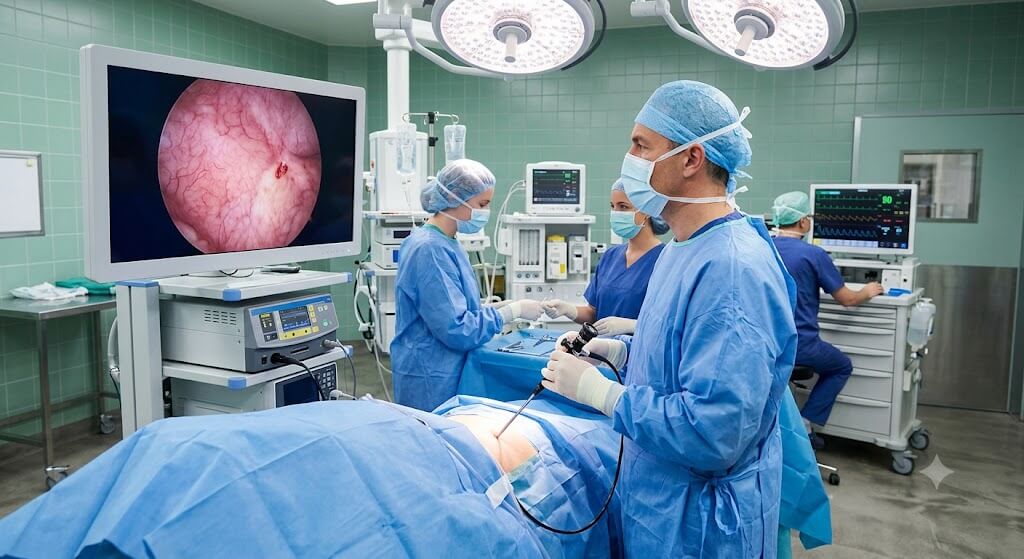
Cystoscopy is one of the most important diagnostic procedures.
A thin camera is inserted through the urethra, allowing the urologist to examine the inside of the bladder directly.
Biopsy
If an abnormal growth is detected, a tissue sample is collected for laboratory examination to confirm the diagnosis and determine the cancer grade.
Factors That Determine Treatment
Every patient's treatment plan is individualized based on several factors, including:
- Cancer stage
- Tumor grade
- Number and size of tumors
- Whether cancer has invaded the bladder muscle
- Patient's age and overall health
- Previous treatments
A multidisciplinary team often helps develop the most appropriate treatment strategy.
Bladder Cancer Treatment Options
1. Transurethral Resection of Bladder Tumor (TURBT)
TURBT is usually the first treatment for non-muscle invasive bladder cancer.
During the procedure:
- A special instrument is inserted through the urethra.
- The tumor is removed without making external incisions.
- Tissue samples are sent for biopsy.
TURBT is both a diagnostic and therapeutic procedure.
2. Intravesical Therapy
After TURBT, some patients may require medication to reduce the risk of recurrence.
The medicine is placed directly inside the bladder through a catheter.
Common intravesical treatments include:
- Immunotherapy
- Chemotherapy
This approach targets cancer cells while limiting effects on the rest of the body.
3. Radical Cystectomy
If cancer has invaded the bladder muscle or is considered high risk, complete removal of the bladder may be recommended.
During radical cystectomy:
- The bladder is removed.
- Nearby lymph nodes may also be removed.
- A new way to store and pass urine is created.
Advances in surgical techniques have improved outcomes and recovery following this procedure.
4. Partial Cystectomy
In selected cases where the tumor is small and localized, only part of the bladder may be removed.
This option is suitable for carefully selected patients.
5. Chemotherapy
Chemotherapy uses medications to destroy cancer cells.
It may be recommended:
- Before surgery to shrink tumors
- After surgery to reduce recurrence risk
- For advanced bladder cancer
Treatment plans are individualized based on the patient's condition.
6. Radiation Therapy
Radiation therapy uses high-energy beams to destroy cancer cells.
It may be used:
- Along with chemotherapy
- As an alternative for patients who are not suitable for surgery
- To relieve symptoms in advanced disease
7. Immunotherapy
Modern immunotherapy helps the body's immune system recognize and attack cancer cells.
It has become an important treatment option for selected patients with advanced or recurrent bladder cancer.
8. Targeted Therapy
Certain advanced bladder cancers may respond to medications that target specific genetic or molecular changes within cancer cells.
Your oncologist may recommend targeted therapy based on specialized testing.
Robotic Surgery for Bladder Cancer
Many bladder cancer surgeries can now be performed using robotic-assisted technology.
Potential advantages include:
- Smaller incisions
- Less blood loss
- Reduced postoperative pain
- Faster recovery
- Shorter hospital stay
- Greater surgical precision
Not every patient is a candidate for robotic surgery, but it may be an excellent option for selected individuals.
Recovery After Bladder Cancer Treatment
Recovery depends on the type of treatment received.
Most patients benefit from:
- Regular follow-up appointments
- Healthy nutrition
- Adequate hydration
- Physical activity as advised
- Emotional support
- Smoking cessation
Patients undergoing surgery may require additional rehabilitation and guidance regarding urinary function.
Can Bladder Cancer Return?
Yes. Bladder cancer has a relatively high risk of recurrence, particularly in non-muscle invasive disease.
For this reason, long-term follow-up is essential.
Patients may require:
- Periodic cystoscopy
- Urine tests
- Imaging studies
- Ongoing surveillance
Early detection of recurrence allows prompt treatment.
Why Early Diagnosis Is Important
Detecting bladder cancer in its early stages offers several advantages:
- More treatment options
- Better chances of preserving bladder function
- Less extensive surgery
- Improved survival outcomes
- Lower risk of cancer spread
Ignoring symptoms such as blood in the urine can delay diagnosis and make treatment more complex.
Bladder Cancer Treatment in Navi Mumbai
Patients seeking Bladder Cancer Treatment in Navi Mumbai can benefit from comprehensive care that includes accurate diagnosis, advanced surgical techniques, medical oncology support, and long-term follow-up.
Modern treatment focuses on preserving quality of life while achieving the best possible cancer control through a personalized treatment approach.
Why Choose MITR Urology Associates?
MITR Urology Associates provides comprehensive evaluation and management for bladder cancer using evidence-based treatment protocols and advanced urological techniques.
Patients receive:
- Early diagnosis and cancer evaluation
- Personalized treatment planning
- Minimally invasive and advanced surgical options
- Coordinated multidisciplinary care
- Long-term surveillance and follow-up
Every treatment plan is tailored to the patient's stage of cancer, overall health, and individual treatment goals.
Conclusion
Bladder cancer is a highly treatable condition, particularly when diagnosed early. Treatment options range from minimally invasive procedures such as TURBT and intravesical therapy to advanced surgery, chemotherapy, radiation therapy, immunotherapy, and targeted treatments.
Choosing the right treatment depends on the stage and characteristics of the cancer, making expert evaluation essential. If you experience symptoms such as blood in the urine or persistent urinary problems, seeking prompt medical attention can lead to earlier diagnosis and more successful treatment outcomes. If you or a loved one has concerns about bladder cancer, don't delay seeking expert care. Book an appointment with the experienced urology team at MITR Urology Associates for a comprehensive evaluation, accurate diagnosis, and a personalized treatment plan designed to achieve the best possible outcome.
Copyright © All Rights Reserved, By MITR Urology Associates